 Save
Save The first time I truly understood honey as an ingredient was watching my grandmother drizzle it into tea on a winter morning, the way it spiraled and transformed everything it touched. Years later, I found myself in my kitchen on a rainy afternoon, thinking about that moment and wondering what would happen if honey became the star of an entire dessert, not just a supporting player. The Honey-Drip was born from that curiosity, a cake that lets guests experience honey in layers, textures, and temperatures all at once. There's something magical about serving a dessert that asks people to participate, to dip, to interact with their food. I realized that day that the best recipes aren't just about technique—they're about creating an experience worth remembering.
I brought this to a dinner party where one guest hesitated before diving in, unsure of the mechanics. Once the first bite hit the honey pot and she tasted that warm, floral sweetness mixing with the tender crumb, her whole face changed. That moment of delighted surprise, repeated around the table, reminded me why I love cooking for people—it's about giving them permission to feel wonder over something as simple as cake and honey.
Ingredients
- All-purpose flour: Two cups provides structure without being heavy; it lets the honey's flavor shine instead of overpowering it.
- Baking powder and baking soda: Together they create a tender, open crumb that absorbs the honey's moisture beautifully, keeping every slice moist even days later.
- Unsalted butter: Half a cup, softened, ensures the cake stays tender; cold or melted butter changes the texture entirely.
- Granulated sugar: Half a cup pairs with the honey to create balanced sweetness without that one-note cloying feeling.
- Honey: Half a cup in the batter infuses every layer with subtle depth; use a mild varietal here so it doesn't compete with the finishing honey.
- Eggs: Three large ones bind everything while adding richness that makes the cake feel luxurious on the tongue.
- Vanilla extract: A teaspoon rounds out the flavor and keeps honey from feeling too intense on its own.
- Whole milk: Three-quarters cup keeps the batter tender and moist; the acid in milk also reacts with baking soda for lift.
- Heavy cream: One cup whipped into the mascarpone filling creates clouds of sweetness that melt against the cake's crumb.
- Mascarpone cheese: A quarter cup adds tang and richness; it's the secret ingredient that keeps the filling from being one-dimensional sweetness.
- High-quality liquid honey: One cup for the central pot is non-negotiable; this is where quality matters most since it's tasted directly and unmasked by other flavors.
- Toasted almonds: A quarter cup chopped brings a welcome textural contrast and a subtle earthiness that makes honey taste more sophisticated.
- Edible flowers: Optional but worth it; they add visual drama and a whisper of floral complexity that elevates the whole presentation.
Tired of Takeout? 🥡
Get 10 meals you can make faster than delivery arrives. Seriously.
One email. No spam. Unsubscribe anytime.
Instructions
- Prepare your pans and preheat:
- Heat your oven to 350°F (175°C) while you grease two 8-inch round pans and line the bottoms with parchment—this prevents sticking and makes turning out the cakes almost effortless. Cold pans give you less working time, so starting with heat already building matters more than you'd think.
- Whisk your dry ingredients:
- In a bowl, combine flour, baking powder, baking soda, and salt, whisking for about thirty seconds to distribute the leavening evenly. Uneven baking powder means some parts rise more than others, creating an uneven crumb.
- Cream butter and sugar until pale:
- Beat the softened butter and granulated sugar together until they look almost fluffy and pale, about three to four minutes on medium speed. You'll see tiny air bubbles form—that's the structure your cake needs to rise properly.
- Add honey, eggs, and vanilla:
- Pour in the honey, then add eggs one at a time, beating after each addition so everything emulsifies smoothly. The vanilla goes in last, just a teaspoon that adds depth without shouting about itself.
- Alternate wet and dry in layers:
- Add a third of the dry mixture, then half the milk, then another third of dry, then the remaining milk, then the final dry ingredients, mixing just until combined after each addition. Overmixing develops gluten and makes the cake tough—stop as soon as you don't see flour streaks.
- Divide and bake:
- Split the batter evenly between your prepared pans and bake for 22 to 25 minutes, until a toothpick inserted in the center comes out clean or with just a crumb or two. The cakes should spring back lightly when you touch the tops, and the edges should pull away just slightly from the pan sides.
- Cool completely:
- Turn the cakes out onto wire racks and let them cool all the way to room temperature—warm cake falls apart when you slice it, which defeats the layering plan.
- Make the honey cream:
- Whip cold heavy cream to soft peaks, then add honey and mascarpone cheese, continuing to whip until stiff peaks form. Chill this until you're ready to assemble; cold filling spreads easier and holds shape better.
- Slice and layer:
- Once the cakes are cool, carefully slice each one in half horizontally to create four thin layers total. Place the first layer on your serving platter, spread generously with honey cream, and repeat until all layers are stacked.
- Create the center honey well:
- Using a 3-inch round cutter, gently push down through the center of the stacked cake to remove a cylinder of cake all the way through. Work slowly and let the cutter do the work; forcing it can crumble the delicate layers.
- Insert the honey pot and fill:
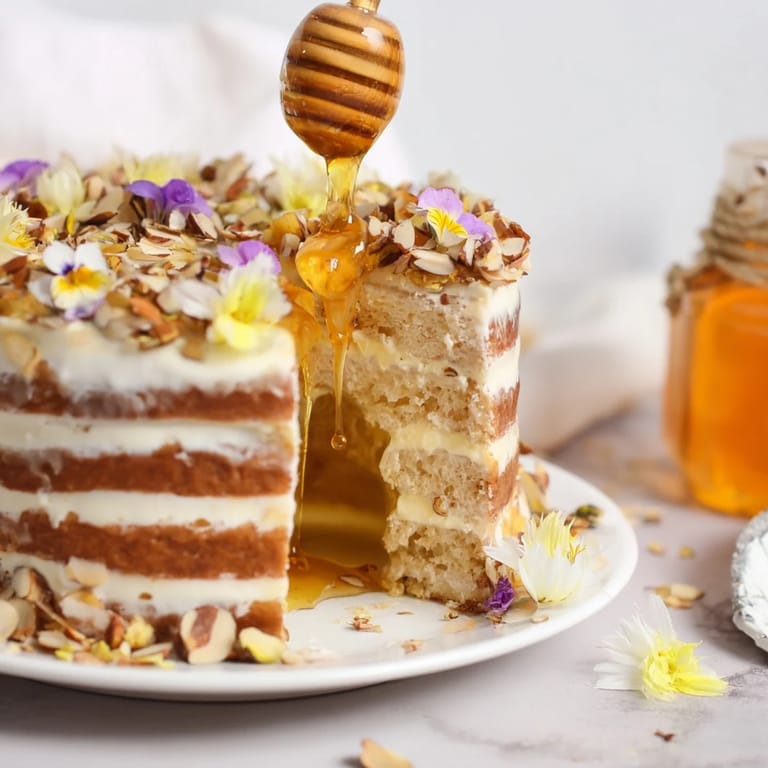
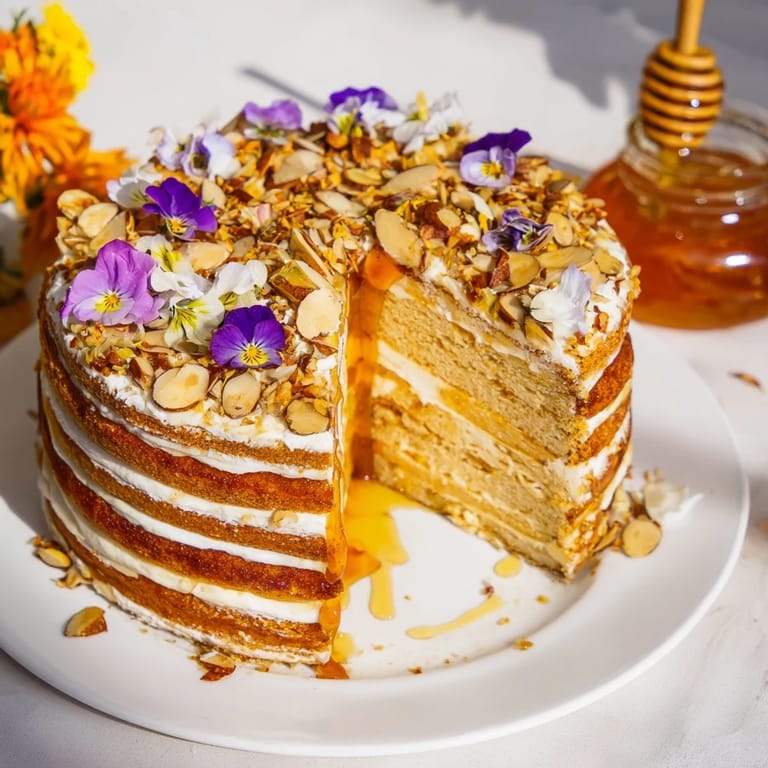
- Place a small glass or ceramic honey pot (something heat-safe if you want to warm the honey) into the hole you've created, then pour in your best liquid honey until it's full. The honey will pool invitingly at the center, waiting to be discovered with each bite.
- Garnish with intention:
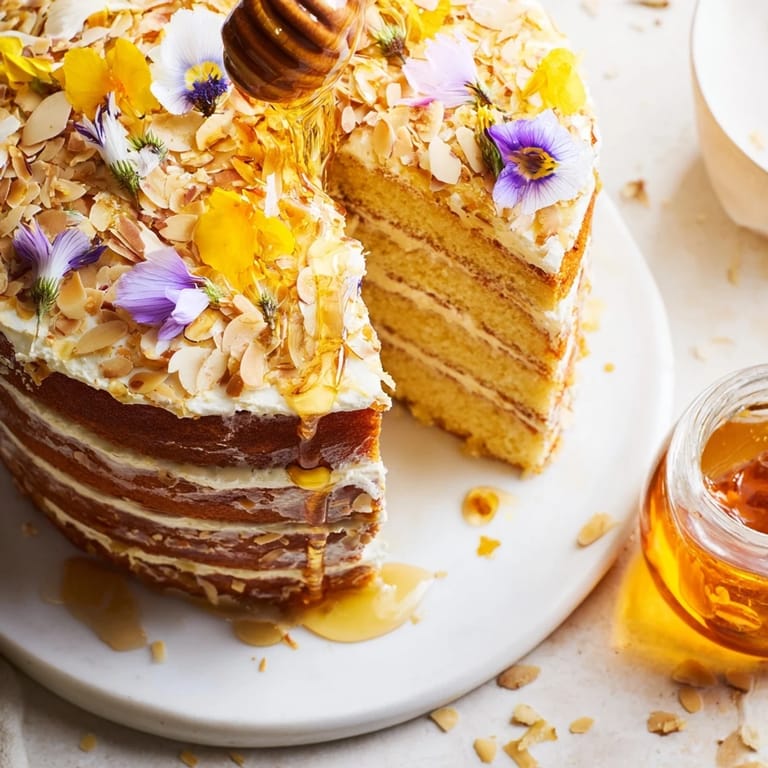
- Scatter toasted almonds across the top, scatter edible flowers if using, and finish with a delicate drizzle of extra honey. This is where the dessert becomes a showpiece, so take a moment to make it beautiful.
 Save
Save I remember my neighbor tasting this at a potluck, looking surprised that something so visually dramatic could taste genuinely delicious rather than gimmicky. She asked for the recipe that night, and I realized the best dishes are the ones where presentation and flavor work together, where the theater serves the taste instead of overshadowing it. That's what The Honey-Drip does—it looks stunning, but it tastes even better than it looks.
Why High-Quality Honey Matters Here
This is one of the few recipes where you'll taste the honey directly and unadorned, so the quality difference between grocery store honey and something from a local beekeeper becomes impossible to ignore. I once used a crystallized honey to fill the center and the texture was all wrong—grainy and disappointing instead of smooth and luxurious. Now I keep a jar of wildflower or acacia honey specifically for this dessert, knowing that the extra few dollars creates a completely different eating experience.
Honey Varieties and What They Bring
Wildflower honey tastes warm and familiar, almost cozy, making the cake feel like a dessert your grandmother might have created. Orange blossom or acacia honey adds floral notes that feel more elegant and unexpected, perfect for when you want to impress or feel a bit fancy in your own kitchen. Lavender honey transforms the whole mood into something that feels almost romantic—I made it once for an anniversary dinner and the floral sweetness became the talking point of the meal, with guests trying to identify what made it taste different.
Variations Worth Exploring
Once you've mastered the basic recipe, it becomes a foundation for experimentation that feels safe and forgiving. I've layered in spiced honey with cinnamon and clove, added lemon zest to the cake batter for brightness, and even topped it with toasted pistachios instead of almonds when almonds weren't available. The mascarpone filling can be swirled with Greek yogurt for tanginess, or you can use whipped cream alone if you want to lighten it. The beautiful part is that no matter what you change, the honey remains the star, and guests still get that moment of delighted participation when they dip into the warm center.
- For a nut-free version, skip the almonds entirely or swap them for toasted seeds like sunflower or pumpkin.
- Serve it with a glass of Moscato or a late-harvest Riesling—both echo the honey's sweetness without competing with it.
- The whole assembled cake keeps refrigerated for two days, making it perfect for planning ahead when you're nervous about timing.
 Save
Save This is the dessert I make when I want to remind people that food is about more than sustenance; it's about shared moments, unexpected delight, and the simple magic of honey. Every time someone dips into that warm center for the first time, I feel like I've given them a small gift.
Recipe FAQ
- → What type of honey works best for the central pot?
High-quality liquid honey such as wildflower or acacia is recommended for its smooth texture and distinct floral notes.
- → Can I substitute the mascarpone in the honey cream?
Yes, cream cheese or ricotta can be used, though mascarpone adds a richer, creamier texture that complements the honey well.
- → How do I create the hollow center in the cake?
After layering and stacking, use a 3-inch round cutter to carefully cut and remove a center portion, creating space for the honey pot.
- → Are there nut-free garnish options?
Yes, simply omit toasted almonds and enhance garnishing with extra edible flowers or a light honey drizzle.
- → What wine pairs well with this dessert?
A glass of Moscato or late-harvest Riesling complements the honey's sweetness and adds a refreshing finish.