 Save
Save There's a moment in spring when the farmers market suddenly bursts with tender greens, and that's when I realized how little effort it takes to eat like you're at a trattoria in Rome. My neighbor handed me a bunch of arugula still dewy from the morning, and I had to do something worthy of it—something simple enough that the ingredients could actually speak for themselves. That afternoon, I whisked together a quick lemon dressing and discovered that good olive oil, honest lemon juice, and a whisper of Dijon mustard could transform a handful of peppery leaves into something that felt both effortless and intentional.
I made this salad for my book club one evening when I was running late and panicking about what to serve, and something beautiful happened—everyone slowed down. No one rushed through it or pushed it to the side. The simplicity gave people permission to actually taste, and suddenly we were debating the quality of different olive oils and arguing about whether pine nuts or walnuts were superior. It became the thing people asked me to bring back.
Ingredients
- Fresh arugula: Buy it as close to cooking as possible because those tender leaves wilt faster than you'd think, and wilted arugula loses that peppery snap that makes this salad worth eating.
- Extra-virgin olive oil: This is the moment to use the good stuff sitting in your cabinet—cheap oil makes cheap dressing, and you'll taste the difference immediately.
- Freshly squeezed lemon juice: Bottled juice tastes flat and tired by comparison, so take the thirty seconds to cut a lemon in half and squeeze; your taste buds will thank you.
- Dijon mustard: It acts as an emulsifier, which means it helps the oil and lemon juice actually stay together instead of separating the second you pour it on the greens.
- Honey: Just a touch rounds out the sharp edges of the lemon and vinegar, creating a dressing that's bright but not aggressive.
- Garlic clove, finely minced: One small clove is all you need—mince it fine so it distributes evenly rather than creating little sharp shocks of flavor in certain bites.
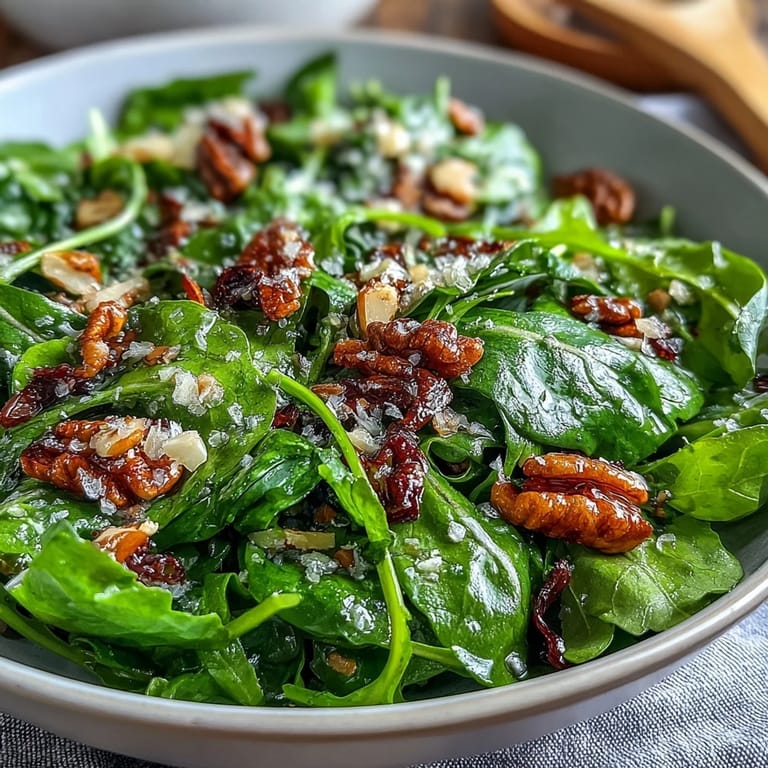
- Parmesan cheese, shaved: Use a vegetable peeler to create delicate ribbons rather than grating it, because the texture changes everything and makes the salad feel more refined somehow.
- Toasted pine nuts: Optional but worth the small effort—they add a buttery richness and textural contrast that makes each forkful more interesting.
Tired of Takeout? 🥡
Get 10 meals you can make faster than delivery arrives. Seriously.
One email. No spam. Unsubscribe anytime.
Instructions
- Build your dressing first:
- In a small bowl or jar, whisk the olive oil, lemon juice, Dijon mustard, honey, minced garlic, salt, and pepper together until the mixture becomes creamy and emulsified. If you're using a jar, seal the lid and shake vigorously for about a minute—sometimes the jar method works even better than whisking.
- Dress the greens gently:
- Place your arugula in a large salad bowl and drizzle with the vinaigrette, tossing carefully so every leaf gets coated but nothing gets bruised into submission. You want the greens to stay perky and alive.
- Add the finishing touches:
- Scatter the shaved Parmesan over the dressed arugula, add the toasted pine nuts if using them, and toss once more with a light hand. Don't overthink this part—restraint is the point.
- Serve straight away:
- Plate it immediately because arugula waits for no one, and the longer it sits in dressing, the more it will wilt. If you're feeding a crowd, toss everything together at the last possible moment.
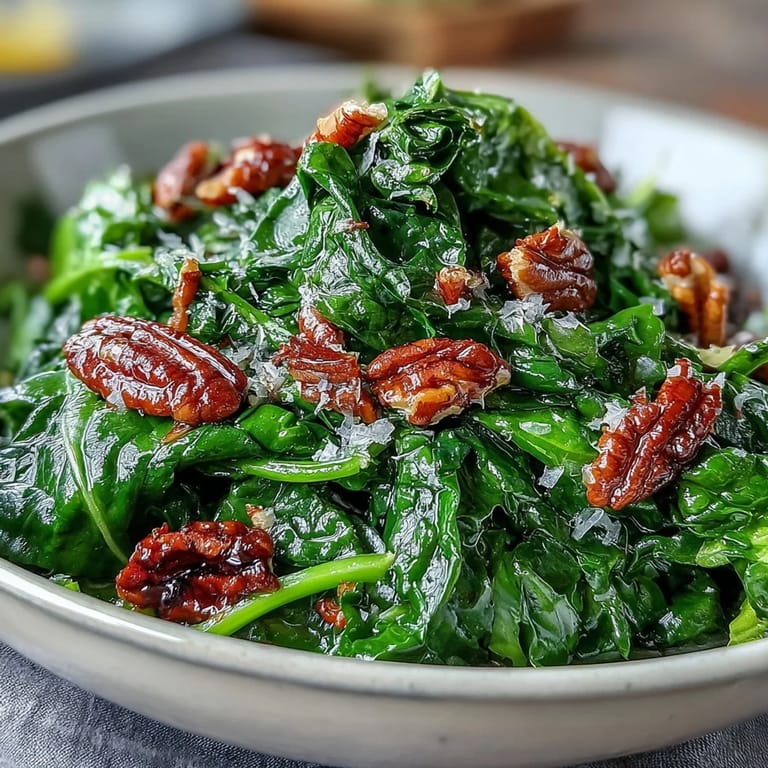 Save
Save My daughter once asked why we were eating 'rabbit food,' and I gave her a small forkful with extra Parmesan. She was quiet for a moment, then asked for her own bowl. That's when I understood this salad isn't about being virtuous or light—it's about discovering that sometimes the most satisfying thing you can eat is just really good ingredients treated with respect.
The Vinaigrette Moment
There's something almost meditative about making a proper vinaigrette because it forces you to slow down and pay attention. When you whisk the ingredients by hand instead of just dumping everything together, you start to see how the oil breaks into smaller and smaller droplets, how the mustard creates this silky emulsion that holds everything together. It's chemistry, but it feels like magic, and suddenly you understand why people get obsessive about dressing.
Making It Your Own
The beauty of this salad is that it's a starting point rather than a rigid formula. I've added crispy pancetta, shredded prosciutto, and roasted chickpeas depending on what was in the fridge and what I was hungry for. Sometimes I toss in thinly sliced radishes for an extra peppery punch, or add cherry tomatoes that burst with summer flavor. The core—arugula, lemon dressing, Parmesan—stays constant, but everything else can shift based on season and mood.
- Crunch variations like toasted walnuts, almonds, or even crispy breadcrumbs can replace pine nuts if you have them on hand.
- A thin slice of red onion adds sharpness, while roasted beets bring earthiness and unexpected sweetness to balance the peppery greens.
- Pairing fresh herbs like tarragon or basil in the dressing itself creates a completely different character while keeping the same basic structure.
Timing and Serving
This salad works as a first course because it's light and awakens the palate, or as a side dish because it doesn't demand center stage. I've served it alongside roasted fish where it felt elegant, and paired it with a thick slice of toasted bread where it felt casual and warm. The timing is always flexible—make the dressing whenever you want, but dress the greens only when you're ready to eat, otherwise you'll end up with a bowl of limp sadness instead of something bright and alive.
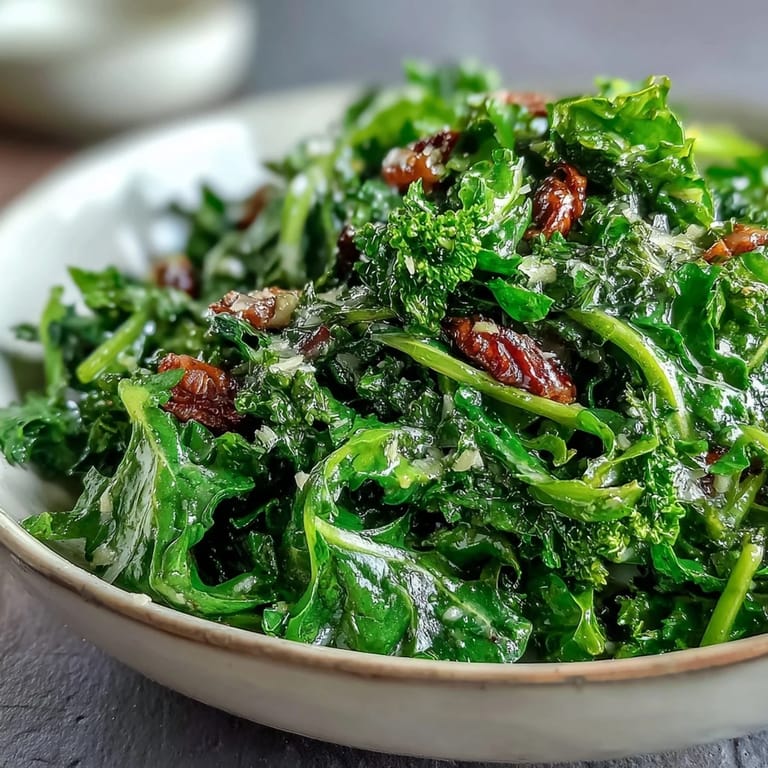 Save
Save Keep this recipe close because it's the kind of thing you'll reach for constantly—when you need something fast but still want to feel like you tried. It's proof that simplicity, when done well, is actually harder to execute than anything complicated.
Recipe FAQ
- → What makes the lemon vinaigrette flavorful?
The vinaigrette balances tangy lemon juice, smooth olive oil, a touch of honey, and a hint of Dijon mustard for depth, accented by fresh garlic and seasoning.
- → Can I substitute the pine nuts?
Yes, toasted walnuts or almonds make excellent crunchy alternatives, offering a different texture and flavor profile.
- → How should I prepare the Parmesan cheese?
Use a vegetable peeler to create delicate shavings that blend smoothly with the greens and vinaigrette.
- → What dishes pair well with this salad?
It complements light Italian fare and pairs beautifully with crisp white wines like Pinot Grigio or Sauvignon Blanc.
- → How do I keep the arugula fresh and crisp?
Use fresh arugula and toss it gently with the vinaigrette just before serving to maintain its crisp texture.