 Save
Save There's something about a bowl that invites you to slow down. My first Black-Eyed Pea Buddha Bowl came together on a Tuesday when I'd promised myself to eat better but still wanted something that tasted like comfort. The moment that tahini dressing hit the warm quinoa, I understood why these bowls had become such a staple in my kitchen—they're equal parts nourishing and deeply satisfying, with layers of flavor that surprise you with every bite.
I made this for a friend who'd just gone vegan, and I watched her face shift from skeptical to genuinely delighted as she tasted it. She asked for the recipe before finishing the bowl, which told me everything I needed to know about how well these flavors work together.
Ingredients
- Quinoa (1 cup, uncooked): This grain cooks fluffy and neutral, creating a perfect canvas for bold flavors; rinse it first to remove any bitterness.
- Water (2 cups): Use filtered if possible, as it affects the final taste of your base.
- Salt: A pinch in the grain water brings out its natural nuttiness.
- Sweet potato (1 medium, peeled and diced): The natural sweetness balances the savory spices and becomes almost caramelized when roasted.
- Red bell pepper (1, chopped): Choose one that feels heavy for its size; it'll have thicker flesh and more juice.
- Red onion (1 small, sliced): The slight bitterness rounds out the bowl's flavor profile beautifully.
- Zucchini (1 small, sliced): Cut it thick enough that it doesn't disappear during roasting but thin enough to cook through.
- Olive oil (2 tbsp): Use good quality; it coats the vegetables and carries the smoked paprika's depth.
- Smoked paprika (1/2 tsp): This spice is the secret—it adds complexity without heat.
- Salt and pepper: Taste as you go; the vegetables will concentrate when roasted.
- Black-eyed peas (2 cups cooked, or 1 can drained): If using canned, rinse them thoroughly to remove excess sodium and starch.
- Ground cumin (1/2 tsp): Warm this with the peas to release its earthy aromatics.
- Garlic powder (1/2 tsp): A gentler approach than fresh garlic here, adding savory depth without overpowering.
- Baby spinach or kale (2 cups): The warm peas and grains will slightly wilt the greens, which is exactly what you want.
- Avocado (1, sliced): Add this just before eating so it doesn't oxidize; a squeeze of lemon keeps it bright.
- Fresh cilantro or parsley (2 tbsp chopped): The herbs finish the bowl with freshness and visual color.
- Tahini (1/4 cup): Choose raw, unsalted tahini for the cleanest flavor and creamy texture.
- Lemon juice (2 tbsp): Fresh squeezed makes an enormous difference in brightness.
- Maple syrup (1 tbsp): This rounds out the tahini's earthiness with subtle sweetness.
- Water (2 tbsp, plus more as needed): Add gradually to reach your preferred dressing consistency.
- Garlic clove (1 small, minced): One clove is enough; too much overpowers the dressing's delicate balance.
Tired of Takeout? 🥡
Get 10 meals you can make faster than delivery arrives. Seriously.
One email. No spam. Unsubscribe anytime.
Instructions
- Heat your oven and prepare the vegetables:
- Preheat to 425°F (220°C) while you peel and chop everything. Toss the sweet potato, bell pepper, red onion, and zucchini with olive oil, smoked paprika, salt, and pepper until they're evenly coated and glistening. Spread them on a baking sheet in a single layer—crowding the pan means steaming instead of roasting.
- Get the vegetables golden:
- Roast for about 25 minutes, stirring halfway through, until the edges turn caramelized and tender. You'll smell the paprika's warmth filling your kitchen, which is a good sign things are progressing beautifully.
- Start your grain while vegetables roast:
- Rinse quinoa under cold water until the water runs clear, then combine with 2 cups fresh water and a pinch of salt in a saucepan. Bring to a boil, then reduce heat to low, cover, and simmer for 15 minutes without lifting the lid.
- Let the grain rest:
- Remove from heat and keep covered for 5 minutes, which allows the grains to finish absorbing moisture. Fluff gently with a fork, separating any clumps—this keeps it light rather than mushy.
- Warm the black-eyed peas:
- In a small skillet over medium heat, stir the drained peas with cumin and garlic powder for 3 to 4 minutes until fragrant and heated through. This brief warming blooms the spices and makes them taste less like canned peas and more like intentional seasoning.
- Make the tahini dressing:
- In a bowl, whisk tahini, lemon juice, maple syrup, water, minced garlic, and salt together until smooth and creamy. If it seems thick, add water a tablespoon at a time until it reaches the consistency of loose peanut butter.
- Assemble your bowls:
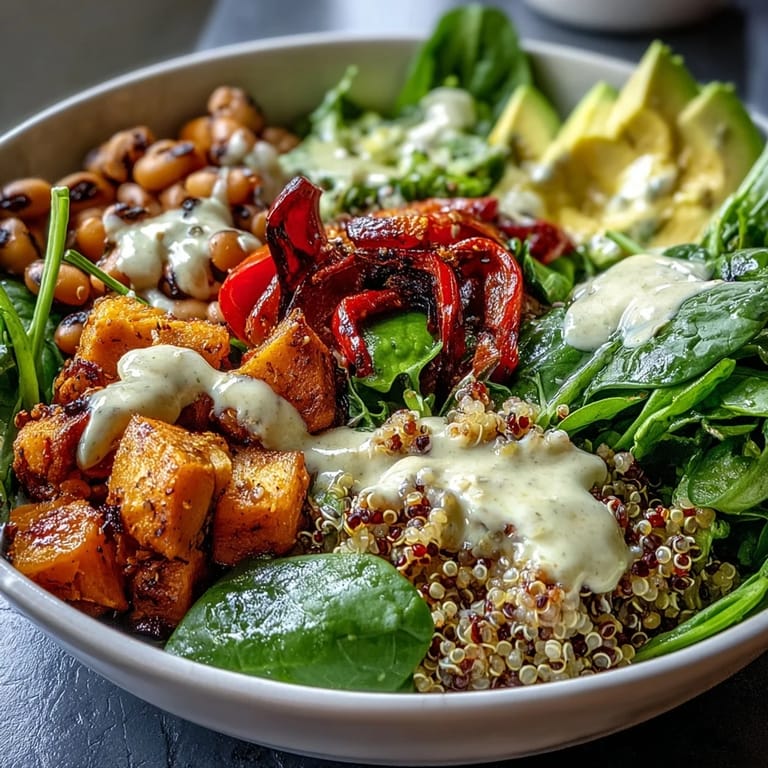
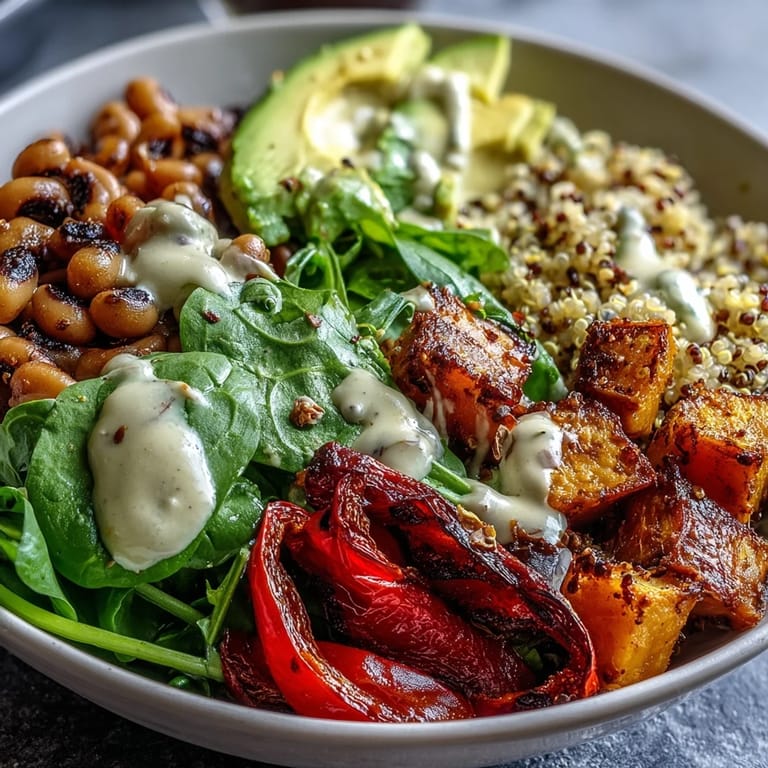
- Divide the warm quinoa equally among four bowls as your base, then layer on the roasted vegetables and warm black-eyed peas. Add the fresh spinach or kale while everything is still warm—the heat wilts it just slightly without cooking it to nothing.
- Finish with flourish:
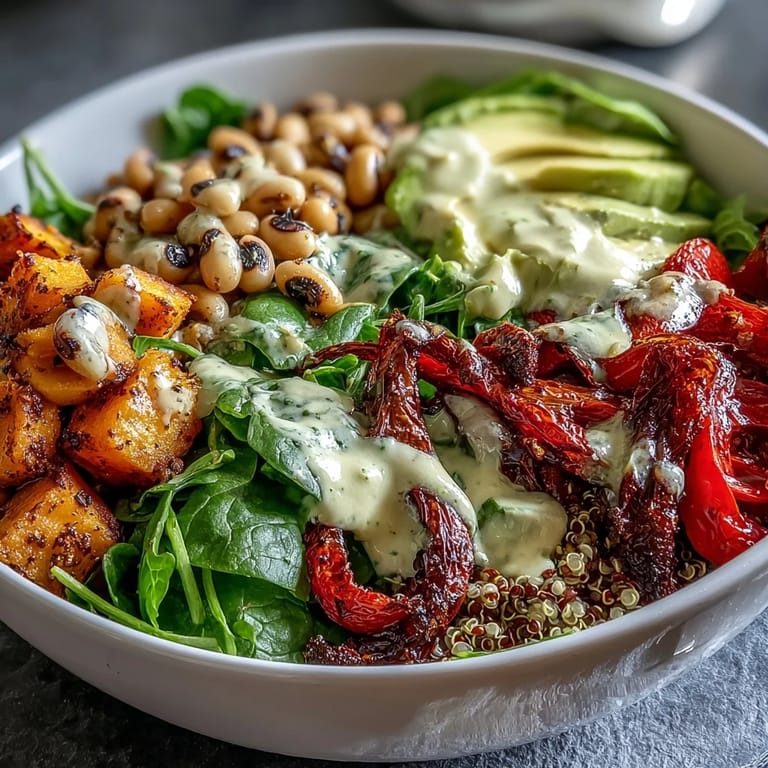
- Drizzle each bowl generously with tahini dressing, top with avocado slices and fresh herbs, then serve immediately while the grains and vegetables are still warm and the greens are just beginning to soften.
 Save
Save One evening, I made this bowl for myself after a particularly long day, and instead of eating it quickly at my desk, I sat down with it slowly. That simple act—actually tasting the different textures and flavors layering together—turned a meal into a moment of real restoration.
Why These Components Matter Together
This bowl works because each component plays a specific role. The quinoa provides a complete protein base, the roasted vegetables contribute earthiness and natural sweetness, the black-eyed peas add a creamy texture and cultural depth, and the tahini dressing ties everything into one cohesive, nourishing bite. I learned early on that attempting to make this bowl without the dressing felt incomplete—it's the glue that transforms separate ingredients into something unified and satisfying.
Variations That Keep Things Interesting
Honestly, this bowl loves flexibility. I've swapped the quinoa for farro when I wanted something heartier, used roasted chickpeas instead of black-eyed peas when I was out of them, and added toasted pumpkin seeds for an unexpected crunch that my guests asked about immediately. The structure stays the same, but you can play with seasonal vegetables and whatever legumes you have on hand. One winter, I roasted broccoli and cauliflower instead, and the bowl felt entirely different yet equally delicious.
Make It Your Own
What I've come to appreciate about this recipe is how it encourages improvisation while still maintaining balance. You can prepare the components ahead of time and assemble in minutes when you're hungry, which has saved me on countless evenings when I needed something wholesome fast. The beauty is that it tastes fresh and intentional no matter how you customize it.
- Swap brown rice for quinoa if you prefer a slightly earthier, chewier grain base.
- Add a sprinkle of toasted seeds or crushed nuts to the finished bowl for textural surprise and extra nutrition.
- Make the dressing thinner if you like it poured generously, or keep it thick if you prefer it as more of a dollop between bites.
 Save
Save This Black-Eyed Pea Buddha Bowl has become my go-to when I want to feed myself well without overthinking it. It's nourishing, infinitely adaptable, and honestly, it might just become your kitchen staple too.
Recipe FAQ
- → Can I make this bowl ahead of time?
Absolutely. The roasted vegetables, quinoa, and black-eyed peas store beautifully in separate containers for up to 4 days. Keep the tahini dressing in a small jar and add fresh greens just before serving. The flavors actually meld and improve overnight.
- → What other grains work well in this bowl?
Brown rice, farro, or wheat berries would all provide excellent nutty flavor and hearty texture. For a grain-free option, use cauliflower rice or roasted sweet potato cubes as your base instead.
- → Is this bowl protein-rich enough for a main meal?
Yes, black-eyed peas provide 13 grams of protein per cup, complemented by quinoa's complete protein profile. The tahini and avocado add healthy fats that help keep you satisfied. At 14 grams of plant-based protein per serving, it's a substantial main course.
- → Can I roast the vegetables differently?
Feel free to use whatever seasonal vegetables you have on hand. Butternut squash, Brussels sprouts, carrots, or broccoli would all roast beautifully with the same smoked paprika and olive oil seasoning. Just adjust roasting times as needed for denser vegetables.
- → How can I make the tahini dressing thicker or thinner?
Start with less water and whisk thoroughly—the tahini will initially seize, then emulsify into a smooth cream. Add water one tablespoon at a time until you reach your desired consistency. For thicker dips, omit the water entirely.
- → What toppings add extra crunch?
Toasted pumpkin seeds, sunflower seeds, or chopped walnuts would add lovely texture. Roasted chickpeas, sliced radishes, or pickled red onions also provide satisfying crunch and bright flavor contrasts.