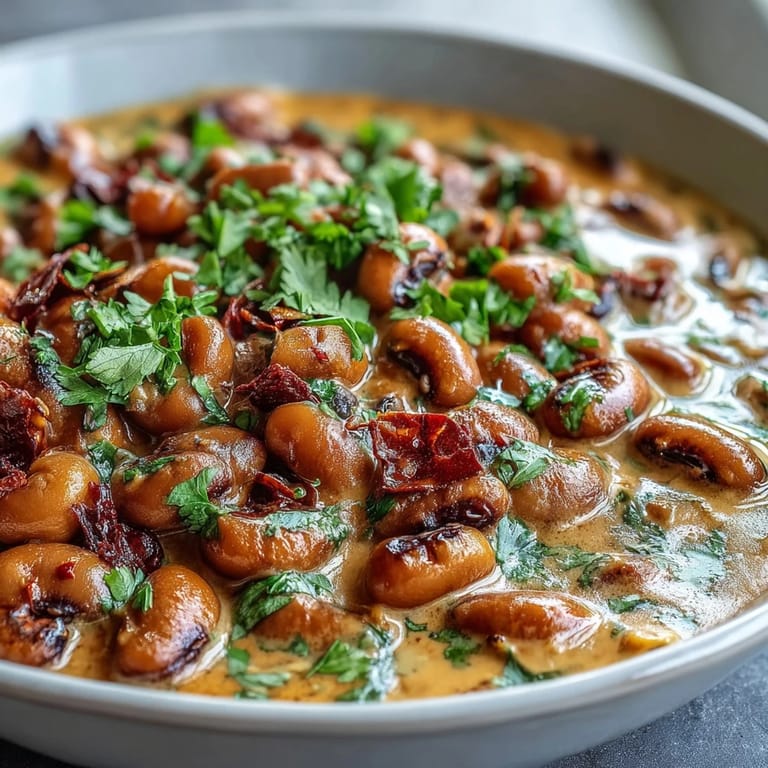
 Save
Save A friend once told me that the best curries taste like they've been simmering in someone's kitchen for years, even if you only just started cooking. That stuck with me when I first made this black-eyed pea curry on a rainy Tuesday, watching the mustard seeds pop like tiny fireworks in hot oil. The smell that filled my apartment—warm turmeric, ginger, coconut—felt like opening a door to somewhere familiar, even though I'd never made it before. What surprised me most wasn't the depth of flavor, but how quickly it came together and how it tasted better the next day, reheated and even more forgiving.
I made this for my neighbor who'd just moved in, and she arrived at my door with wine and stayed for three hours just talking over bowls of curry. That's when I knew it wasn't just good food—it was the kind of dish that makes people linger, that gives you permission to take your time and enjoy company without awkwardness. She asked for the recipe before she left, which felt like the highest compliment.
Ingredients
- Black-eyed peas: Use canned and drained unless you have dried ones soaked overnight, because they absorb the curry flavor like tiny flavor sponges and cook in the same amount of time.
- Coconut oil: It adds a subtle richness that vegetable oil can't quite replicate, but honestly, use what you have if coconut oil isn't on hand.
- Onion, garlic, ginger: These three are the foundation—don't skip chopping them fresh, as the texture and aroma matter more than you'd think.
- Ground cumin and coriander: Buy these whole and grind them if you're feeling ambitious, but the pre-ground versions work perfectly fine and won't judge you.
- Turmeric: This is what gives the curry its golden color and earthy warmth, so use real turmeric, not some dusty bottle from three years ago.
- Garam masala: Add this near the end so the fragrance doesn't cook off into the air—you want it in the dish, not your memories.
- Coconut milk: The full-fat version makes the curry silky, and yes, it matters.
- Green peas: Frozen peas are honestly better than fresh ones here because they hold their shape and add color at the last second.
- Fresh cilantro and lime: These are the finishing touches that make people ask what's different about your curry, so don't leave them out.
Tired of Takeout? 🥡
Get 10 meals you can make faster than delivery arrives. Seriously.
One email. No spam. Unsubscribe anytime.
Instructions
- Wake up the pan with heat and seeds:
- Pour coconut oil into a large saucepan and let it get shimmering and almost smoking over medium heat. If you're using mustard seeds, add them now and listen for that magical sizzle—it should sound energetic, almost like the pan is waking up, and it only takes about thirty seconds before they start popping.
- Build your flavor base with onions:
- Add your chopped onion and let it cook down slowly, stirring occasionally, until it turns soft and deeply golden—this takes about five minutes but it's worth every second because this is where your curry gets its sweetness. The kitchen will smell unbelievably good at this point.
- Add the aromatic trio:
- Stir in the minced garlic, grated ginger, and any green chilies you're using, then cook for just a minute or two until the rawness mellows and everything smells even more incredible. Don't let it burn, though—keep your nose close and your spoon moving.
- Bloom the spices:
- Add your cumin, coriander, turmeric, chili powder, and black pepper all at once, and stir constantly for about a minute so they release their oils and lose that raw spice taste. You'll smell the shift happen—that's when you know they're ready to play nicely with everything else.
- Let the tomatoes break down:
- Pour in the diced tomatoes and let them cook down for about five minutes, stirring occasionally, so they lose their bright edge and become part of the sauce rather than chunks floating around. The color will deepen and the whole thing starts looking like actual curry.
- Welcome the beans and peas:
- Add your cooked black-eyed peas and green peas, stirring everything together so every bean gets coated in that beautiful spiced tomato base. Take a moment to appreciate how colorful this looks right now.
- Bring in the coconut milk and broth:
- Pour in your coconut milk and vegetable broth, stirring gently until everything is combined and the curry looks creamy and welcoming. Bring it to a gentle simmer—not a rolling boil, just a soft, steady bubble.
- Let it simmer and meld:
- Leave it uncovered for fifteen to twenty minutes, stirring occasionally, while the flavors get to know each other and the sauce thickens into something rich and cohesive. This is when you can relax, make rice, or just stand there breathing in the aroma like it's aromatherapy.
- Finish with warmth and brightness:
- Stir in the garam masala and lime juice right at the end, adjusting salt as needed—the lime juice will make everything taste more like itself, sharper and more alive. Taste it and trust your instincts about whether it needs more salt or spice.
- Serve with ceremony:
- Ladle the curry into bowls, scatter fresh cilantro on top like you're plating something you're proud of, and serve it hot with rice or naan. This is the moment when people's faces light up.
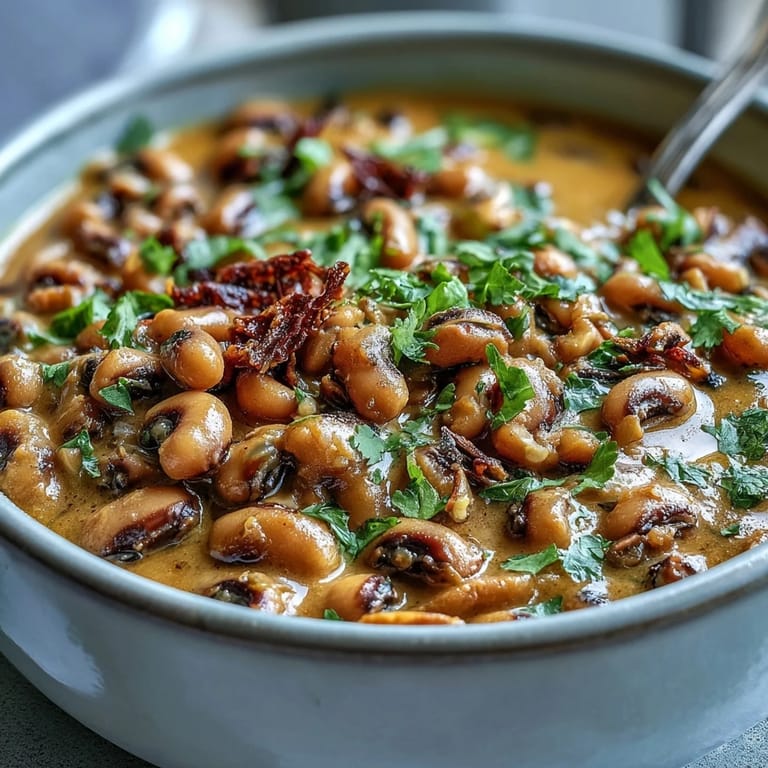 Save
Save My partner came home one evening when this was simmering on the stove and said, before even greeting me, that the apartment smelled like comfort. That's when I realized this curry had become something more than a weeknight dinner—it was our comfort food, our go-to when someone needed feeding or when we just wanted the kitchen to feel alive again.
Why This Curry Feels Different
Most bean-based curries feel heavy or one-dimensional, but black-eyed peas have this interesting texture where they're creamy on the inside and hold their shape on the outside, making each spoonful feel textured and interesting. The coconut milk doesn't overpower the spices—instead, it acts like a translator, letting each flavor come through clearly while adding richness that makes the whole thing feel indulgent without being dairy-based. There's also something almost meditative about how this recipe comes together, like the steps are choreographed to build flavor in layers.
Customizing It to Your Preferences
I've made this curry with chickpeas when I was out of black-eyed peas, with kidney beans because someone had them on hand, and honestly, they all work beautifully because the spice base is so forgiving and flexible. The heat level is completely up to you—add an extra chili or a pinch more of chili powder if you like things that wake you up, or dial it back if you're cooking for people who prefer subtle warmth. Some versions benefit from a cinnamon stick or a handful of curry leaves added at the beginning, which adds an almost floral layer that makes you feel like you're eating something that took hours to prepare.
Serving and Storage Magic
This curry is meant to be served hot, scooped over fluffy basmati rice or served alongside warm naan bread that you can use to scoop up every last bit of sauce. It reheats beautifully on the stove with a splash of water if needed, and it actually tastes better the next day because the flavors have had time to deepen and settle.
- Leftovers keep for three days in the refrigerator and taste even better as the spices continue to develop.
- This curry also freezes well for up to two months, making it perfect for batch cooking on a Sunday and having comfort food ready on difficult weeknights.
- If the sauce thickens too much when reheating, just add a bit of water or broth and stir gently until it reaches the consistency you remember.
 Save
Save This curry has become one of those recipes I make when I want to feel grounded, when I want my kitchen to smell like home, or when I need to prove to someone that I care enough to cook. It's humble and unpretentious, but it never disappoints.
Recipe FAQ
- → Can I use dried black-eyed peas instead of canned?
Yes, soak 1 cup dried black-eyed peas overnight, then cook until tender before adding to the curry. This will take about 45-60 minutes of boiling.
- → How spicy is this curry?
The spice level is mild to medium. You can adjust the heat by reducing or increasing the chili powder and green chilies to your preference.
- → Can I make this curry ahead of time?
Absolutely. The flavors actually deepen and improve after sitting in the refrigerator for 1-2 days. Store in an airtight container and reheat gently.
- → What can I serve with this curry?
Basmati rice, naan bread, roti, or quinoa are excellent choices. The creamy sauce pairs perfectly with any grain or flatbread for soaking up the flavors.
- → Is this curry freezer-friendly?
Yes, it freezes well for up to 3 months. Cool completely before transferring to freezer-safe containers. Thaw overnight in the refrigerator before reheating.
- → Can I substitute the coconut milk?
You can use cashew cream or a mixture of yogurt and vegetable broth, though the texture and flavor profile will change slightly.