 Save
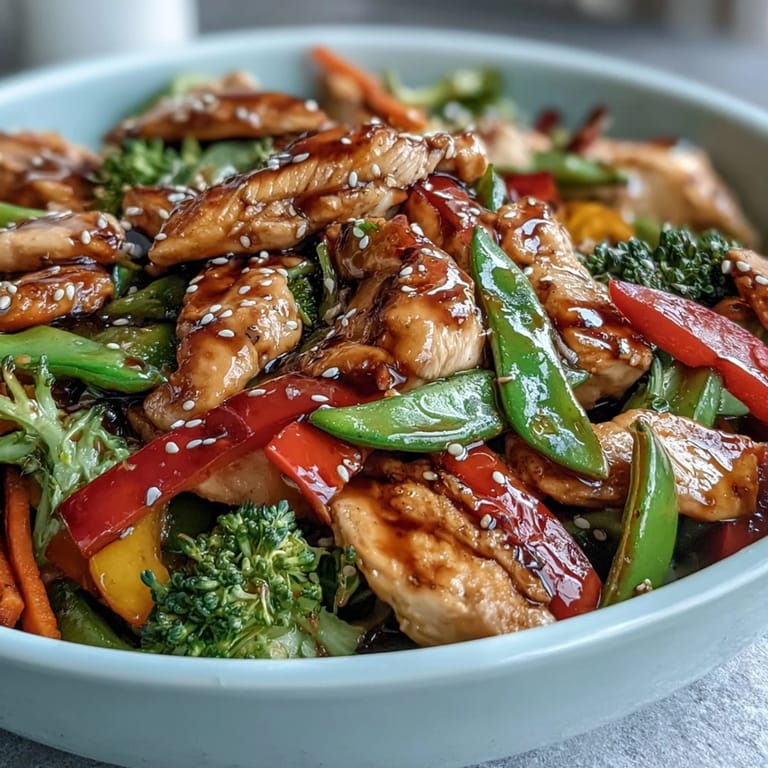
Save There's this moment in a busy weeknight when I realized stir-fry could be my secret weapon—no complicated techniques, just high heat and a sharp knife. My friend Sarah had mentioned she was trying to eat cleaner, and I threw together whatever vegetables were in my crisper drawer with chicken breast, and somehow it became the meal everyone asked me to make again. The smell of ginger and garlic hitting hot oil still takes me back to that first time, when I understood that healthy food didn't have to taste like punishment.
I made this for my cousin during a phase when she was training for a half-marathon, and she became obsessed with how much protein it packed without feeling heavy before a run. She started making it on her own and texted me photos of her variations—adding snap peas one week, trying it with shrimp the next. That's when I knew this recipe had crossed over from just being efficient to actually being something people genuinely wanted to eat.
Ingredients
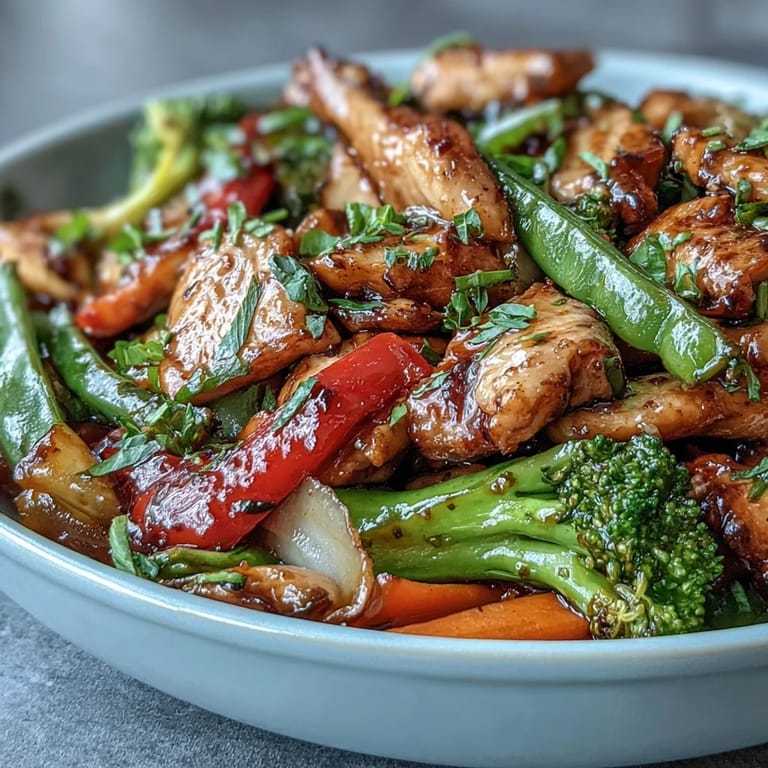
- Chicken breast: Slice it thin so it cooks fast and doesn't dry out; I learned to freeze it for 15 minutes first to make slicing easier.
- Red and yellow bell peppers: They bring sweetness and color that makes the plate feel abundant, not like diet food.
- Zucchini: It's forgiving and adds bulk without heaviness if you don't overthink the cooking time.
- Snap peas: These stay crisp if you don't crowd the pan, and they add a natural sweetness that balances the ginger.
- Carrot: Julienne it thin so it cooks through in the same timeframe as everything else.
- Broccoli florets: Go in first because they need the extra minute; I used to add them with the peppers and they'd stay too crunchy.
- Spring onions: Save these for the end as a fresh finish that brightens the whole dish.
- Soy sauce or tamari: Tamari is your friend if gluten matters; the flavor holds up just as well.
- Oyster sauce: Optional but it adds a depth that makes people ask what your secret ingredient is.
- Rice vinegar: This cuts through the richness and prevents the dish from tasting one-dimensional.
- Sesame oil: Use the good stuff even though it's small; a little goes far and changes everything.
- Ginger and garlic: Fresh is non-negotiable here; they're doing the heavy lifting flavor-wise.
- Cornstarch slurry: This thickens the sauce so it clings to everything instead of pooling at the bottom of the pan.
Tired of Takeout? 🥡
Get 10 meals you can make faster than delivery arrives. Seriously.
One email. No spam. Unsubscribe anytime.
Instructions
- Make your sauce while the wok sits cold:
- Whisk together soy sauce, oyster sauce if you're using it, rice vinegar, sesame oil, ginger, garlic, chili flakes, and that cornstarch mixed with water. This takes two minutes and means you won't be scrambling later when everything's already cooking.
- Get your pan properly hot:
- Medium-high heat matters here; you want the oil to shimmer and almost smoke before the chicken touches down. This is what gives you those golden edges and keeps everything from steaming instead of searing.
- Cook the chicken until it's just done:
- About 4 to 5 minutes, stirring constantly so every piece gets contact with the heat; you're looking for light golden color, not brown. Pull it out immediately and set it aside on a plate, even if it looks slightly underdone because it'll finish cooking when it goes back in.
- Start with the vegetables that take longest:
- Broccoli, carrot, and snap peas go in first for 2 minutes with the fresh oil; you want them to get a little color and soften slightly at the edges but still have backbone.
- Add the quick-cooking vegetables:
- Bell peppers and zucchini need 2 to 3 minutes; they should be tender but not limp, still holding their shape. The smell at this point is when you know it's working.
- Bring everything back together:
- Chicken goes back in with the sauce, and you toss for 2 to 3 minutes until the sauce thickens and coats everything like a glossy blanket. Taste it here and adjust the heat or salt if you need to.
- Finish with spring onions and serve straight away:
- The contrast of fresh, raw onion against the hot stir-fry is what makes this feel restaurant-quality at home.
 Save
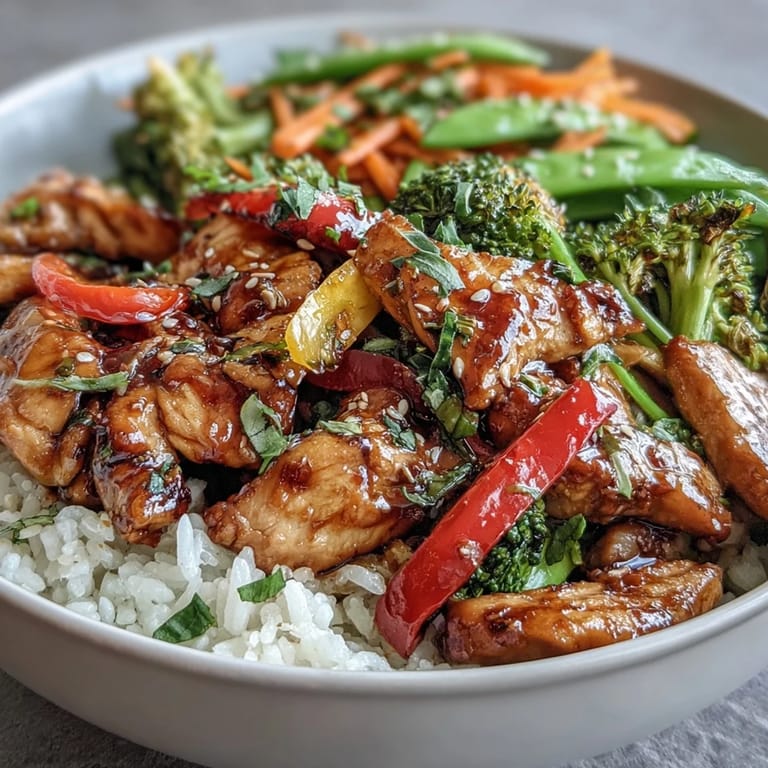
Save My partner came home from a stressful day, saw this on the counter, and didn't say anything for the first minute except to eat. That quiet satisfaction, the way stress just seemed to melt off him—that's when a recipe stops being about macros and becomes about care.
The Heat Question
The chili flakes are there if you want them, but they're genuinely optional. I've made this mild for my mom and spicy for my friends who practically live on sriracha, and it works both ways because the ginger and garlic already give you flavor complexity. If you do add heat, start conservative—you can always add more, but you can't take it back.
Making It Your Own
The beauty of stir-fry is that it's forgiving if you understand the timing principle: hard vegetables first, soft vegetables second, protein set aside and brought back at the end. I've subbed in broccoli rabe, thin asparagus, bok choy, whatever looked good at the market. Shrimp cooks in half the time of chicken, so watch it closely; tofu benefits from being pressed first so it actually absorbs the sauce instead of sliding around.
Storage and Leftovers
This keeps in the fridge for three days in an airtight container, though the vegetables soften a bit and the sauce gets thicker as it sits. Honestly, I reheat it gently in a pan with a splash of water rather than the microwave because the texture stays better. You could meal-prep Sunday and eat it all week, or make it fresh each time if you're the type who has vegetables on hand, which honestly becomes easier once you start cooking like this regularly.
- Reheat gently so vegetables don't turn to mush.
- Store the sauce and vegetables together to keep everything from drying out.
- Fresh spring onions are best added right before serving rather than stored with the rest.
 Save
Save This recipe became my go-to because it proved that eating well doesn't mean boring yourself, and that the fastest meals can still feel intentional and nourishing. Make it once and you'll understand why it keeps showing up in my rotation.
Recipe FAQ
- → How long does the stir-fry take to prepare and cook?
Preparation takes about 15 minutes, and cooking requires another 15 minutes, making the total time around 30 minutes.
- → Can I substitute chicken with other proteins?
Yes, tofu or shrimp are excellent alternatives that adapt well to the sauce and cooking method.
- → What vegetables are included in the stir-fry?
The stir-fry features bell peppers, zucchini, snap peas, carrot, broccoli florets, and spring onions.
- → How can I make this dish spicier?
Increasing chili flakes or adding a dash of sriracha will enhance the heat and spice of the dish.
- → Is this dish suitable for gluten-free diets?
Using tamari instead of soy sauce ensures it remains gluten-free; verify all condiments are certified gluten-free.