 Save
Save I discovered Korean BBQ nachos entirely by accident when my brother brought home a mountain of tortilla chips and challenged me to do something unexpected with them. He'd just gotten back from Seoul, buzzing about the street food he'd eaten, and I was standing at my kitchen counter thinking about gochujang-marinated beef I'd planned for dinner. It hit me in that split second—why not combine them? Twenty minutes later, we were pulling a bubbling tray from the oven, and he laughed and said I'd just invented something neither of us could stop eating.
The first time I served this to actual guests, I was nervous about whether fusion cooking would land, but watching people reach for piece after piece made me realize something—the best food is the kind that brings people together without pretense. My neighbor Maria kept saying it tasted like something she'd steal directly from a street vendor's stall, which I took as the highest compliment.
Ingredients
- Flank or sirloin steak, thinly sliced: Thin slices cook fast and absorb the marinade beautifully; partially freeze the beef for 15 minutes before slicing if your knife work needs help.
- Gochujang: This Korean chili paste is the backbone of the marinade, bringing heat, umami, and a slightly sweet undertone that makes everything sing.
- Soy sauce: Adds saltiness and depth; use low-sodium if you prefer to control the salt level yourself.
- Brown sugar: Balances the heat of the gochujang and helps caramelize the beef as it sears.
- Sesame oil: A little goes a long way—it adds that toasty, nutty fragrance that screams Korean kitchen.
- Fresh garlic and ginger: These aromatic foundations make the marinade feel alive and fresh, not one-dimensional.
- Rice vinegar: Cuts through richness and brightens the whole flavor profile.
- Tortilla chips: Choose sturdy ones that won't collapse under the weight of cheese and toppings; I prefer the unflavored kind so they don't compete with the bold Korean flavors.
- Mozzarella and Korean cheese blend: Mozzarella melts smoothly while a cheddar blend adds sharpness; using both gives you the best of both worlds.
- Fresh vegetables (red onion, carrot, cucumber, scallions): These provide brightness and crunch that prevents the dish from feeling heavy.
- Kimchi: The funky, tangy finishing touch that ties the whole Korean theme together.
- Sesame seeds and fresh herbs: Toasted sesame seeds add a subtle crunch and nutty flavor, while cilantro or shiso brings freshness.
Tired of Takeout? 🥡
Get 10 meals you can make faster than delivery arrives. Seriously.
One email. No spam. Unsubscribe anytime.
Instructions
- Build your marinade:
- Whisk together gochujang, soy sauce, brown sugar, sesame oil, minced garlic, ginger, rice vinegar, and black pepper until it looks glossy and smooth. The gochujang will seem thick at first, but the oils and liquid will help loosen it into a coating consistency.
- Marinate the beef:
- Toss your thinly sliced beef into the marinade and let it sit for at least 20 minutes—longer is fine if you have time. This isn't just about flavor; the marinade helps tenderize the meat and ensure every bite carries that gochujang punch.
- Get your oven ready:
- Preheat to 200°C (400°F) so it's hot and waiting when you need it for the final cheese-melting stage.
- Sear the beef:
- Heat a large skillet over medium-high heat until it's hot enough that a drop of water sizzles immediately. Working in batches so you don't overcrowd the pan, sear the marinated beef for 2–3 minutes until the edges are caramelized and the meat is cooked through. You want some color and char here—that's where the flavor lives.
- Layer your nachos:
- Line a baking tray with parchment paper and spread tortilla chips in an even layer. Sprinkle half the mixed cheeses over the chips, then scatter the cooked beef across the top, and finish with the remaining cheese. This three-layer approach ensures every chip gets some cheese-and-beef action.
- Melt the cheese:
- Bake for 6–8 minutes until the cheese is bubbling at the edges and turns golden. You'll smell that moment when it's ready—a warm, nutty aroma that fills the kitchen.
- Top and serve:
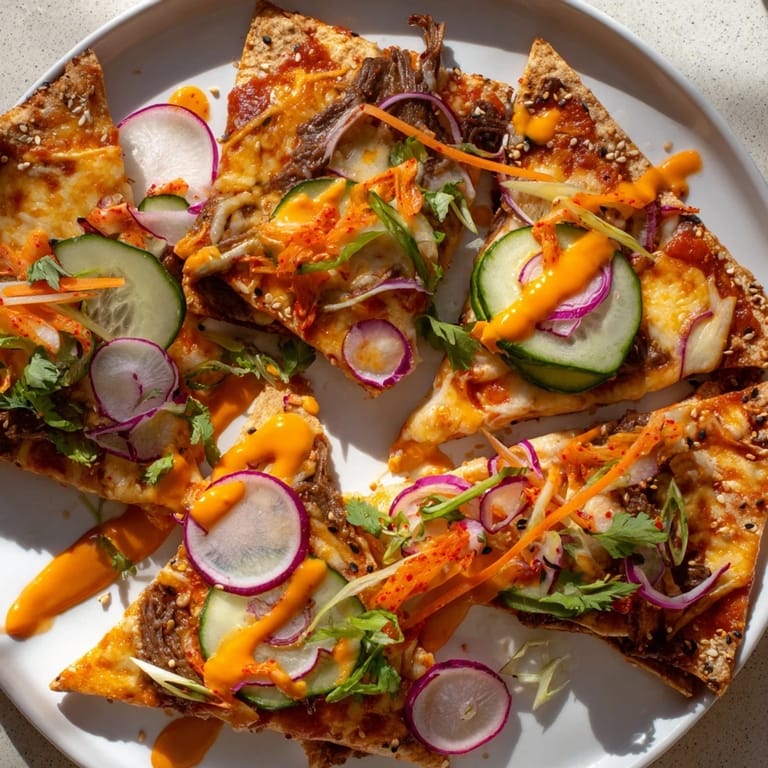
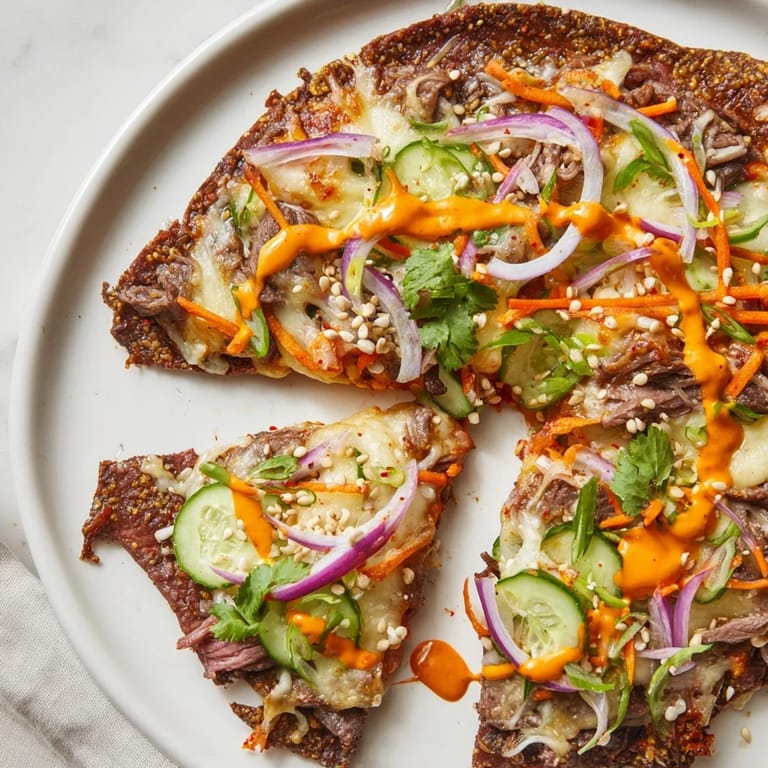
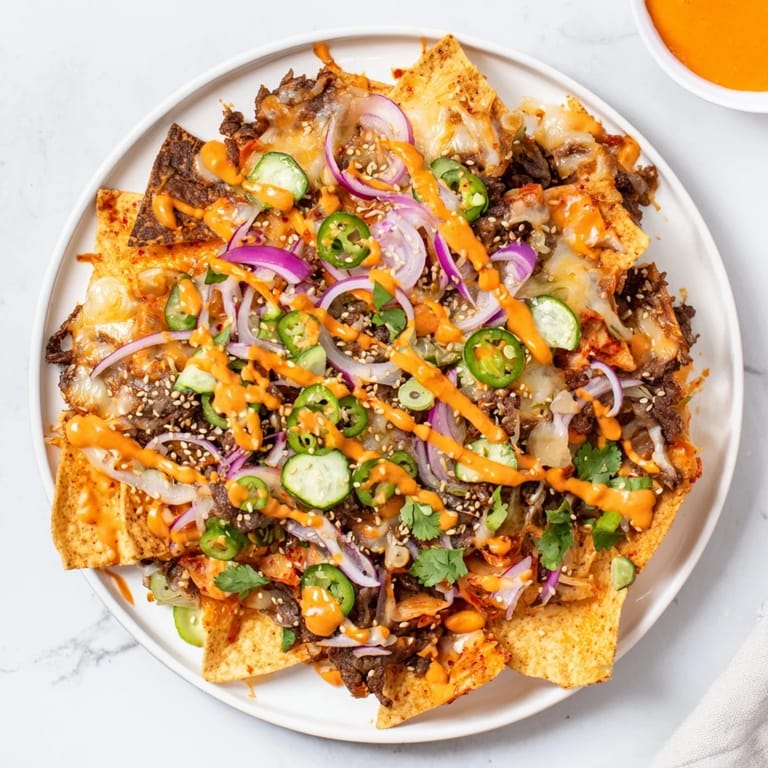
- Pull the tray from the oven and immediately scatter the fresh vegetables (red onion, carrot, cucumber, scallions, red chili if using) and sesame seeds over the hot cheese. Top with kimchi and fresh herbs, drizzle with sriracha mayo or gochujang mayo if you're using it, and serve right away with lime wedges on the side.
 Save
Save There was a moment when my partner took a bite, closed their eyes, and just smiled without saying anything. That's when I knew this dish had crossed over from experiment to keeper—it wasn't trying to be authentic Korean food or authentic Mexican food, it was just genuinely delicious in its own hybrid way.
Building the Perfect Marinade
The magic of this dish lives in the marinade balance—too much gochujang and you get one-note heat, too little and the beef tastes bland. I learned this by overseasoning a batch and then correcting with more brown sugar and sesame oil to round out the flavors. The sweetness of brown sugar isn't about making it a dessert; it's about creating depth and helping the beef caramelize as it hits the hot skillet. Think of it like seasoning a glaze—you want layers of flavor that build on each other.
Cheese Strategy and Melting
Using two cheeses instead of one is a kitchen trick I borrowed from pizza makers. Mozzarella gives you that beautiful stretch and melts evenly, while a cheddar or pizza cheese blend adds sharpness and color. The contrast between creamy melted cheese and the crispy chips is non-negotiable—it's what makes every bite interesting. Baking at 200°C is hot enough to melt the cheese quickly without drying out the beef, and the parchment paper keeps everything from sticking without affecting the crust of the chips.
Variations and Customizations
One night I made this with grilled chicken instead of beef and it was equally satisfying—sometimes gentler, less intensely savory. I've also played with different vegetables based on what's in season or what I can find: radishes add a peppery bite, avocado slices bring creaminess, and pickled jalapeños add vinegar sharpness that cuts through the richness beautifully. Don't be afraid to swap, but try to keep a balance of heat, acid, and freshness.
- Substitute the beef with marinated chicken breast or pressed tofu for a lighter protein option.
- Add avocado, pickled radish, or jalapeños if you want extra freshness and textural interest.
- Make it vegetarian by marinating mushrooms or jackfruit in the same gochujang mixture for an unexpectedly satisfying result.
 Save
Save Korean BBQ nachos are the kind of food that reminds you why cooking matters—it's when different traditions collide and create something that feels brand new but tastes like comfort. Make this when you want to impress without stress, or when you just need something delicious to bring people around the table.
Recipe FAQ
- → How should I marinate the beef?
Mix gochujang, soy sauce, brown sugar, sesame oil, garlic, ginger, rice vinegar, and black pepper. Coat thinly sliced beef and let it sit for at least 20 minutes to absorb the flavors.
- → Can I substitute the beef with other proteins?
Yes, grilled chicken, tofu, marinated mushrooms, or jackfruit work well as alternatives to create varied flavor profiles.
- → What cheeses work best for this dish?
A blend of shredded mozzarella and Korean cheeses like mozzarella-cheddar or pizza cheese melts nicely and complements the spicy beef.
- → How can I add extra freshness to the nachos?
Add sliced avocado, radish, or pickled jalapeños alongside the fresh vegetables to brighten each bite.
- → What beverages pair well with these nachos?
Crisp lagers or chilled soju balance the dish’s bold and savory flavors elegantly.