 Save
Save I stumbled onto this platter concept during a late-night scroll through photos of a friend's gallery opening. The image that stopped me wasn't the artwork on the walls—it was the charcuterie board in the corner, but someone had gone wild with it. Deep purples, shocking magentas, acid greens, all arranged on black like tiny edible neon signs. I went home and immediately started experimenting with vinegars and beets, convinced I could recreate that electric energy in my own kitchen. The first attempt was chaotic, but somewhere between the third batch of beet-dyed eggs and trying different fruit combinations, it clicked.
The first time I made this for a dinner party, I was nervous about the timing. But standing back to survey the finished board ten minutes before guests arrived, something shifted. My partner walked in, stopped dead, and just said, 'Wow.' That's when I realized this wasn't really about the flavors—though they matter—it was about creating a moment where food became art and nobody felt like they had to pretend to be impressed.
Ingredients
- Mini cucumbers: Their thin skin softens beautifully in the pickling liquid, so skip the peeling and embrace the texture.
- Rainbow carrots: Cut on the bias for visual drama, and they hold their crunch longer than you'd expect.
- Radishes: These stay remarkably crisp even after a full day of marinating—they're secretly the MVPs of any pickle board.
- Red onion: The sharpness mellows beautifully as it sits, turning almost sweet by the time people eat it.
- White vinegar: Neutral enough to let other flavors shine, though apple cider works if that's what you have.
- Mustard seeds and peppercorns: These float around like tiny flavor bombs, so invite people to notice them.
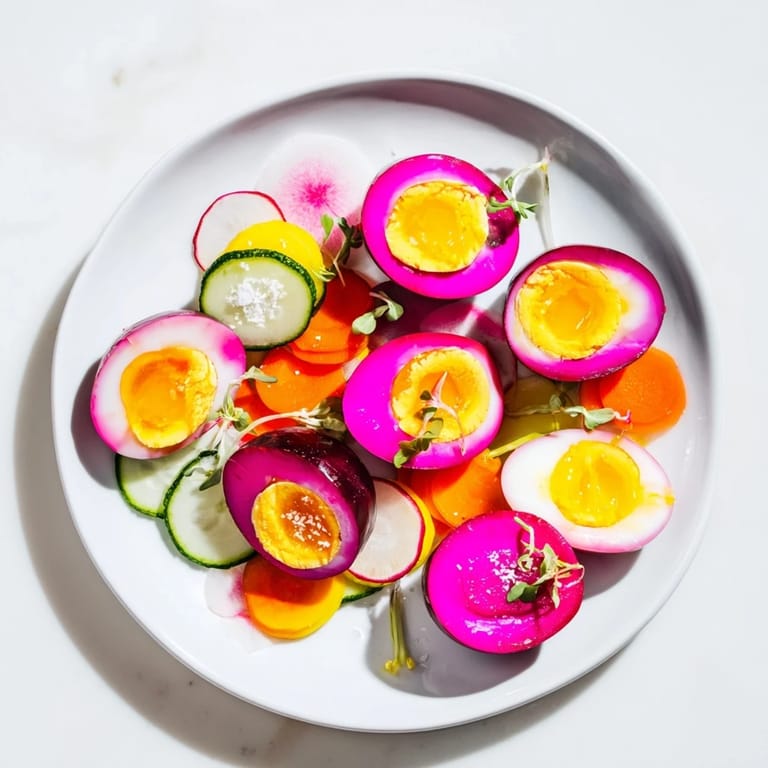
- Large eggs: Go for the biggest ones you can find—more surface area for the beet dye to work its magic.
- Cooked beet: Buy pre-cooked if you're short on time; the color payoff is worth it regardless.
- Fresh blueberries: Add these last-minute to prevent staining other fruits and to keep them plump and bright.
- Dragon fruit: Its shocking pink flesh is the real star—don't skip it for budget reasons.
- Microgreens or edible flowers: These aren't just garnish; they're what transforms it from food to a gallery installation.
- Flaky sea salt: The kind with texture, not table salt—the difference is subtle but real.
Tired of Takeout? 🥡
Get 10 meals you can make faster than delivery arrives. Seriously.
One email. No spam. Unsubscribe anytime.
Instructions
- Make your pickling liquid:
- Combine vinegar, water, sugar, salt, mustard seeds, and peppercorns in a saucepan and bring to a simmer. You'll know it's ready when the sugar and salt have fully dissolved and the mustard seeds smell almost floral. Let it cool slightly before pouring—you want it hot enough to set the vegetables but cool enough to handle.
- Quick-pickle your vegetables:
- Arrange your sliced cucumbers, carrots, radishes, and onion in a heatproof container, then pour the warm liquid over everything. Let it come to room temperature naturally, then refrigerate for at least 2 hours (overnight is honestly better). The vegetables will go from crunchy to perfectly tender-crisp, and the colors will deepen as they sit.
- Boil and cool your eggs:
- Bring a pot of cold water with your eggs to a boil, then let them cook for 8 to 9 minutes depending on how runny you like the yolk. The exact timing matters here—too short and they're impossible to peel cleanly, too long and you get that gray-green ring. Plunge them immediately into ice water and let them sit for at least 5 minutes before peeling under cool running water.
- Dye your eggs with beet magic:
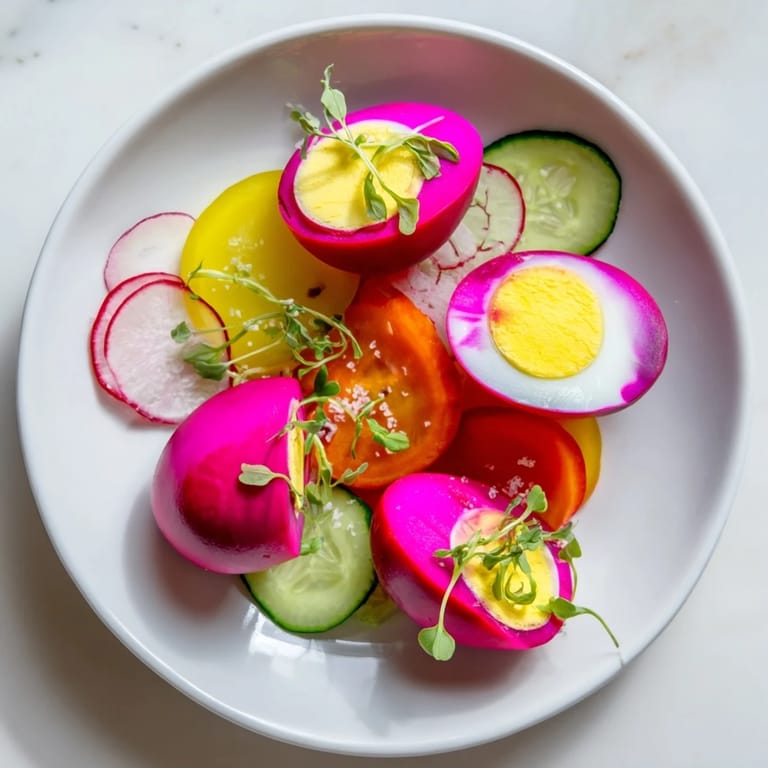
- Peel your cooled eggs and place them in a jar with sliced beet, vinegar, water, sugar, and salt. The beet will start staining the eggs almost immediately, creating marbled patterns within 30 minutes and deep crimson tones by morning. Refrigerate for at least 2 hours, checking in halfway through to watch the transformation.
- Arrange your neon night:
- On a large black serving board, create clusters rather than neat rows—group the pickled vegetables together, arrange the halved or sliced beet eggs, then scatter the fresh fruits in pockets of color. The chaos is intentional; let the eye travel.
- Garnish and chill:
- Sprinkle microgreens or edible flowers across the board and finish with a light shake of flaky sea salt. Everything should be cold when it hits the table, so keep it refrigerated until the last possible moment.
 Save
Save What struck me most about this dish wasn't the taste—though the pickles are tangy-perfect and the beet eggs taste like springtime and earth. It was watching my sister photograph it before eating anything, her phone held at different angles, trying to capture that electric energy. She posted it without hesitation, and three people asked her the next day where she had it made. Nobody believed her when she said I made it at home.
Why This Board Works as a Centerpiece
There's something about presenting food on a dramatic black surface that makes every color feel intentional and precious. The neon fruits seem brighter, the pickles more jewel-like, the beet-dyed eggs almost otherworldly. I've noticed that when people approach a black board instead of white, they slow down. They actually look at what's in front of them instead of just reaching. It changes the entire rhythm of how people eat.
Make-Ahead Magic
This is one of those rare recipes where doing work days in advance makes everything better. The pickles need time to develop flavor, the beet eggs need hours to achieve their deepest color, and honestly, having everything prepped means you can arrange the board in under 5 minutes right before guests arrive. I usually make the pickles and beet eggs the day before, then add the fresh fruit just a few hours before serving to keep everything at peak texture and color.
Customize Your Color Story
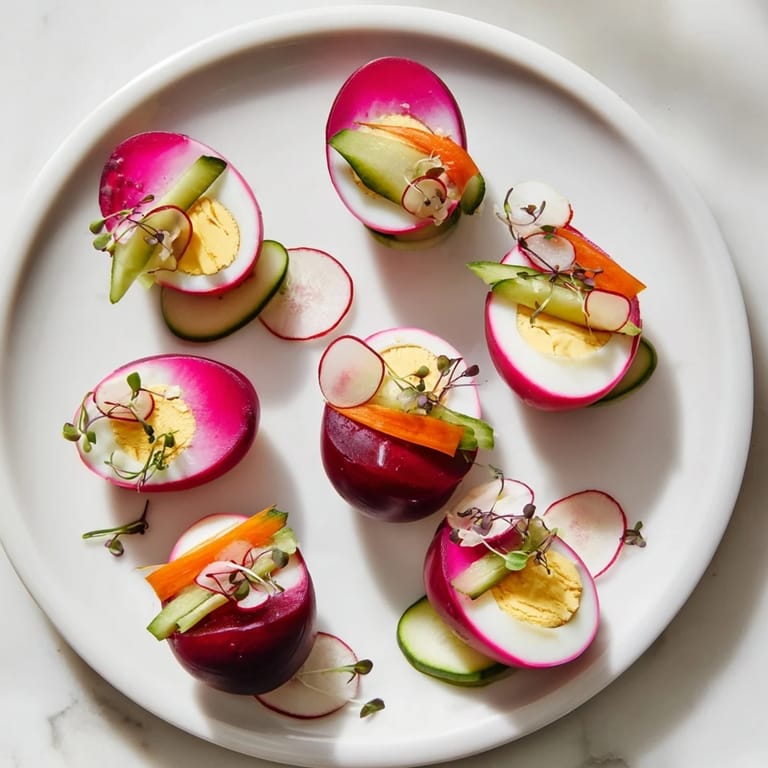
Once you understand the basic formula of vinegar plus vegetable equals color, you can start experimenting with your own palette. Turmeric creates warm golden brines, purple cabbage produces moody blues, and beets are your reds and magentas. The board doesn't need to look exactly like mine—it needs to look like something you'd be proud to photograph. The magic happens when you stop following the recipe and start trusting your eye.
- Experiment with different pickled vegetables to build your own color story—don't feel locked into cucumbers and carrots.
- If you want extra drama, try making a few beet eggs and a few turmeric eggs for pure contrast.
- Remember that softer fruits like berries add visual interest but can bleed into each other, so position them strategically.
 Save
Save This board is proof that sometimes the most memorable food moments come from being willing to play, to let a picture on a screen inspire you into the kitchen, to arrange things purely because they make you happy to look at. Every time I make it, I remember my sister's expression and my partner's simple wow, and I'm reminded that feeding people isn't about perfection—it's about creating moments they won't forget.
Recipe FAQ
- → How long should the pickled vegetables marinate?
Marinate pickled vegetables for at least 2 hours, preferably overnight, to develop full flavor and crisp texture.
- → What gives the eggs their bright color?
The eggs are soaked in a beet-based dye made from cooked beets, vinegar, sugar, and salt, which imparts a vibrant hue and mild earthiness.
- → Can I use different fruits for the platter?
Yes, other fresh fruits with contrasting colors and textures can be used to complement the pickled vegetables and eggs.
- → What is the best way to serve this platter?
Arrange the pickled vegetables, sliced beet-dyed eggs, and fresh fruits on a dark serving board for dramatic visual impact, garnished with microgreens or edible flowers.
- → Are there options for dietary preferences?
To make it vegan, simply omit the beet-dyed eggs and increase the variety of pickled vegetables for added color and flavor.