 Save
Save There's a moment in late autumn when I realized that the best part of French onion soup wasn't actually the soup at all—it was the thing floating on top. My neighbor brought over a thermos of hers on a gray afternoon, and I was struck by how those golden, garlicky croutons transformed from mere bread into something that commanded the whole experience. That's when I started obsessing over getting them perfectly crispy, with just enough tang from the sourdough to echo the caramelized onions below.
My first attempt at these was chaos—I used fresh bread and underestimated how much the oven's heat would dry them out. By the time I pulled the tray out, half the batch was borderline burnt while the other half still felt soft. Now I'm evangelical about using day-old sourdough, and the difference is honestly staggering. It's one of those small choices that separates mediocre croutons from the kind you find yourself eating straight from the container while standing at the kitchen counter.
Ingredients
- Sourdough bread, cut into 1-inch cubes (4 cups or about 200 g): Day-old bread is non-negotiable because it's already lost moisture and toasts more evenly than fresh loaves, which tend to have a soft interior that resists browning.
- Olive oil or melted unsalted butter (3 tbsp): Oil crisps faster and more uniformly, but butter adds a richness that feels luxurious if you're using cheese as well.
- Garlic clove, minced (1): Raw garlic becomes mellowed and almost sweet once toasted, so don't shy away from pushing it into every crevice of your bread pieces.
- Sea salt (1/2 tsp): This seasons the crouton itself, not just the surface, so distribute it intentionally rather than shaking it on at the end.
- Freshly ground black pepper (1/4 tsp): Fresh pepper tastes alive in a way that pre-ground never quite achieves, and these little croutons deserve that attention to detail.
- Dried thyme or herbes de Provence (1/4 tsp, optional): These herbs toast alongside everything else and their flavor deepens, though you can absolutely skip them if you want the sourdough and garlic to be the stars.
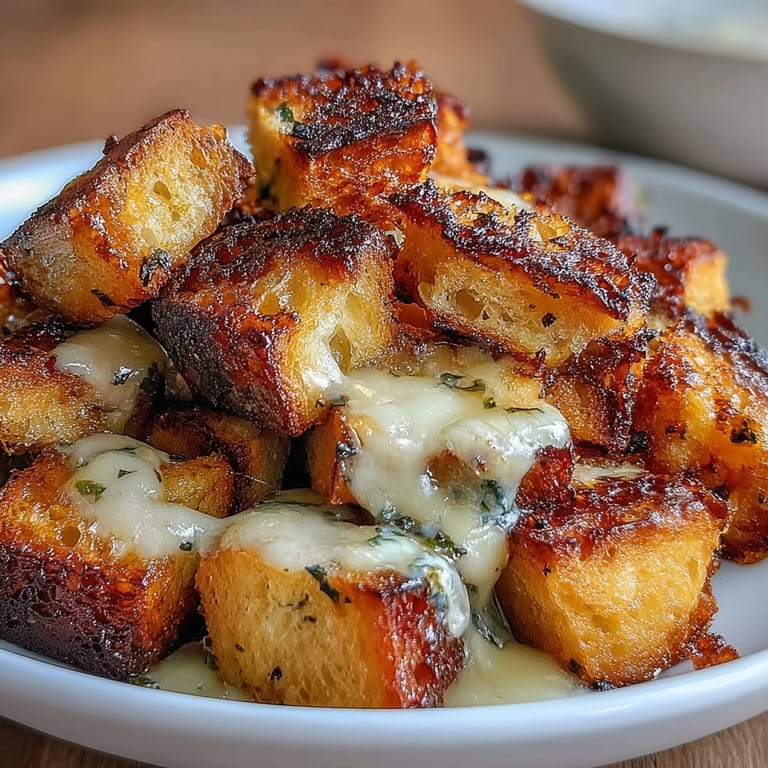
- Grated Gruyère or Emmental cheese (1/2 cup or 50 g, optional): Adding cheese creates pockets of melted richness that catch on your spoon when you eat the soup, though it's truly optional if you prefer restraint.
Tired of Takeout? 🥡
Get 10 meals you can make faster than delivery arrives. Seriously.
One email. No spam. Unsubscribe anytime.
Instructions
- Set your oven to work:
- Preheat to 375°F (190°C) and line a baking sheet with parchment paper so nothing sticks and every crouton gets direct heat from below. This temperature is the sweet spot—hot enough to crisp quickly, but not so intense that the outsides burn before the insides dry out.
- Make your aromatics coat:
- Whisk together the olive oil, minced garlic, salt, pepper, and any herbs you're using in a large bowl until they're emulsified and fragrant. The minced garlic won't fully dissolve, and that's exactly what you want—those little pieces will toast directly on the bread.
- Dress your bread like it matters:
- Add the sourdough cubes to the bowl and toss until every single piece is coated, which usually takes longer than you'd expect because bread is porous and wants to absorb the oil. Get your hands in there if you need to—a spoon can leave corners untouched.
- Spread and bake:
- Arrange the cubes in a single layer on the parchment, leaving space between each piece so they bake rather than steam. After 8 minutes, give the tray a shake and a stir, rotating it if your oven has hot spots, then continue baking for another 7–10 minutes until they're golden and you can hear them crunching when you nudge them.
- Add cheese if you're going that route:
- Pull the croutons out while they're still hot, sprinkle the cheese over them, and return everything to the oven for just 2–3 minutes until the cheese is melted and slightly bubbling. Watch this part—cheese goes from perfect to burnt in seconds.
- Cool before crowning:
- Let them sit for a minute or two so the cheese sets and the residual heat mellows, then pile them onto your soup while they're still warm enough to matter.
 Save
Save There was an evening when my partner came home to find me standing over a bowl of these croutons, eating them one by one like they were the most precious thing in the kitchen. I didn't even have soup made yet—I was just tasting them, understanding how they worked, why they mattered. That's when croutons stopped being a topper for me and became something worth making on purpose.
The Sourdough Question
I've experimented with every bread I could find, and sourdough wins because its tang doesn't disappear in the oven—it actually intensifies when heated. Whole wheat feels heavy, focaccia is too oily to begin with, and standard sandwich bread is too soft to ever achieve real crunch. The sourness also creates a flavor contrast with sweet caramelized onions that makes you taste both more acutely, which is the real magic of this pairing.
Why Cheese Changes Everything
Adding cheese transforms these from a simple crouton into something closer to a savory component, almost a mini-appetizer on top of your soup. When the cheese melts, it creates little pockets of richness that coat your spoon and make each bite feel substantial. Gruyère is traditional because its nuttiness echoes the caramelized onions, but Comté adds sweetness and Swiss brings a cleaner, sharper flavor.
Storage and Timing
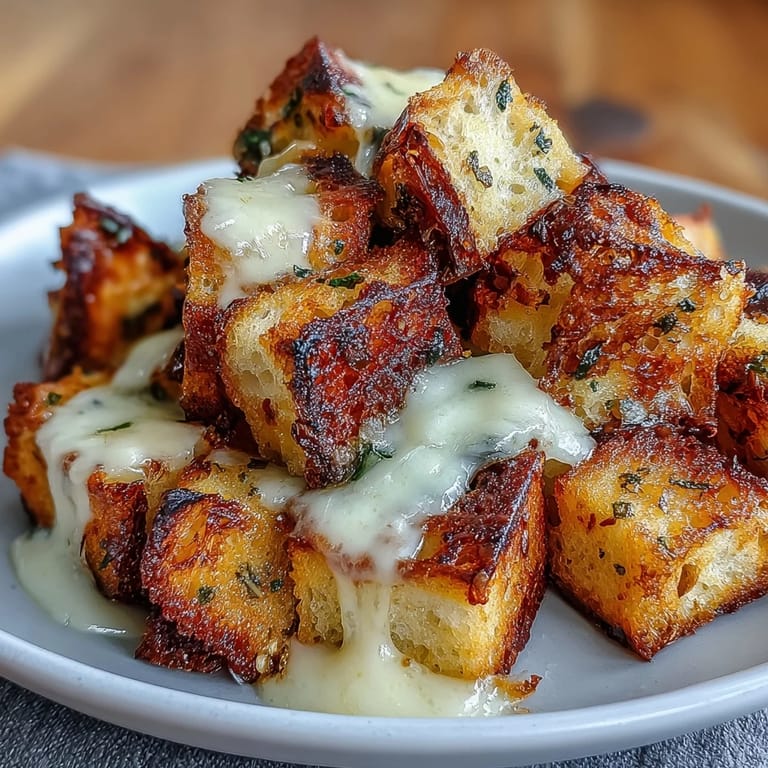
These croutons stay crispy for a surprising three days if you keep them in an airtight container, which means you can make them ahead and still feel like you're pulling something fresh from the oven. I always make at least double what I think I need because they disappear faster than the soup itself, especially if guests are around. The real lesson is that making them fresh is lovely, but having a stash in your pantry for an unexpected bowl of soup is even better.
- Cool them completely before sealing the container or they'll steam and lose their crunch.
- If they soften after a few days, you can refresh them in a 300°F oven for five minutes.
- Don't bother making these more than three days ahead—they're at their absolute best within the first day.
 Save
Save These croutons have become my way of saying I care about the small details, that a bowl of soup deserves more than just being practical. They're proof that sometimes the thing that takes fifteen minutes to make matters more than the thing that takes hours.
Recipe FAQ
- → What type of bread works best for these croutons?
Day-old sourdough bread cut into cubes is ideal for achieving a crunchy texture and slight tanginess.
- → Can I use butter instead of olive oil?
Yes, melted unsalted butter can be used for a richer flavor instead of olive oil.
- → Is cheese necessary for these croutons?
Cheese like Gruyère or Emmental is optional; it adds richness and a melted topping when baked briefly after crisping.
- → How do I store leftover croutons?
Store cooled croutons in an airtight container for up to three days to maintain their crispness.
- → Can herbs be adjusted or omitted?
Yes, dried thyme or herbes de Provence add flavor but can be omitted or replaced based on preference.
- → What’s a tip for intensifying garlic flavor?
Rubbing bread cubes with a halved garlic clove before tossing enhances the garlic taste subtly.