 Save
Save My kitchen counter was covered in flour dust, and I had no idea if this would actually work. I'd been baking sourdough for months, but shaping a turkey felt like crossing into art class territory. The dough was soft and alive under my hands, and as I pressed those teardrop feathers into place, I realized this wasn't just bread anymore. It was a conversation starter, a centerpiece, and maybe a little bit of magic wrapped in fermented dough.
I made this for a Friendsgiving once, and the room went silent when I set it down. Someone asked if it was too pretty to eat, and within ten minutes, the tail feathers were gone and people were tearing into the body with their hands. That crusty exterior crackled with every pull, and the soft, tangy interior disappeared faster than any fancy appetizer I'd ever bought. It became the thing everyone remembered, not because it was perfect, but because it was unexpected and warm and tasted like effort and care.
Ingredients
- Bread flour: The high protein content gives this loaf structure and chew, which you need when shaping something this elaborate.
- Water: Room temperature water keeps your starter happy and your dough easy to work with during those stretch and fold sessions.
- Active sourdough starter: This is your leavening and flavor, so make sure it's bubbly and doubled before you mix it in.
- Fine sea salt: It tightens the gluten and brings out the tangy depth of the fermentation.
- Black olives or peppercorns: These become the turkey's eyes, and I prefer peppercorns because they stay put during baking.
- Red bell pepper or dough: A tiny piece becomes the wattle, and if you use dough, just tint it with a drop of beet juice or paprika.
- Additional flour: For dusting your hands and surface so the dough doesn't stick while you sculpt.
- Egg: Brushing this on before baking gives a shiny, golden finish, but plant milk works too if you're keeping it vegan.
- Seeds: Poppy, sesame, or flax seeds add texture and visual detail to the feather sections.
Tired of Takeout? 🥡
Get 10 meals you can make faster than delivery arrives. Seriously.
One email. No spam. Unsubscribe anytime.
Instructions
- Autolyse the dough:
- Stir together the flour and water until no dry bits remain, then cover the bowl and walk away for 30 to 45 minutes. This rest lets the flour hydrate fully and makes the dough easier to handle later.
- Mix in starter and salt:
- Add your bubbly starter and the salt, then use your hands or a wooden spoon to work everything together until it feels cohesive and slightly sticky.
- Stretch and fold:
- Every 30 minutes for the next 2 hours, wet your hands, grab one side of the dough, stretch it up, and fold it over itself, rotating the bowl as you go. You'll feel the dough tighten and become smoother with each round.
- Bulk ferment:
- Cover the bowl and let the dough rise at room temperature for 5 to 7 hours until it's doubled, jiggly, and full of bubbles. The timing depends on your kitchen's warmth, so watch the dough, not the clock.
- Shape the turkey:
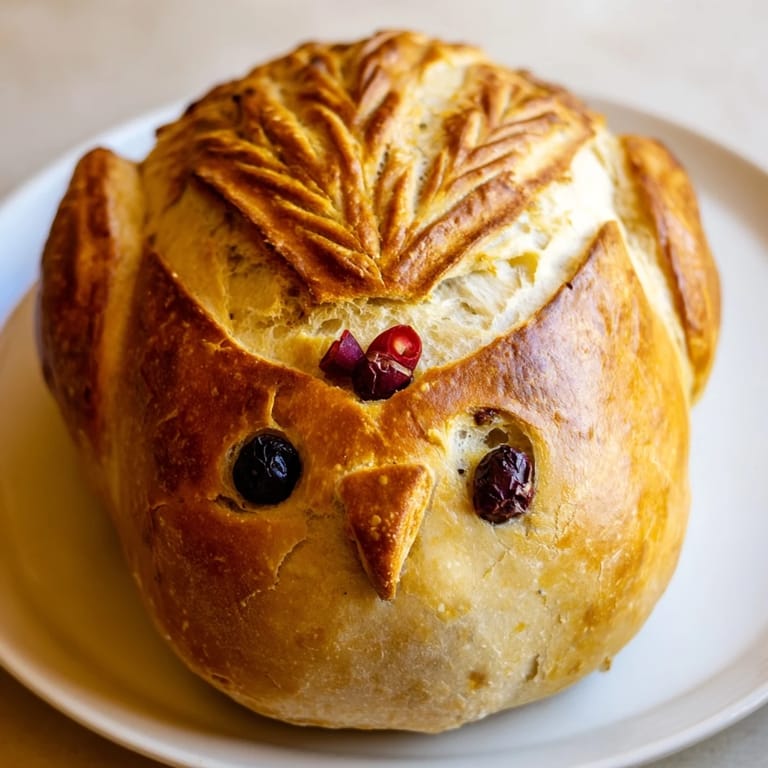
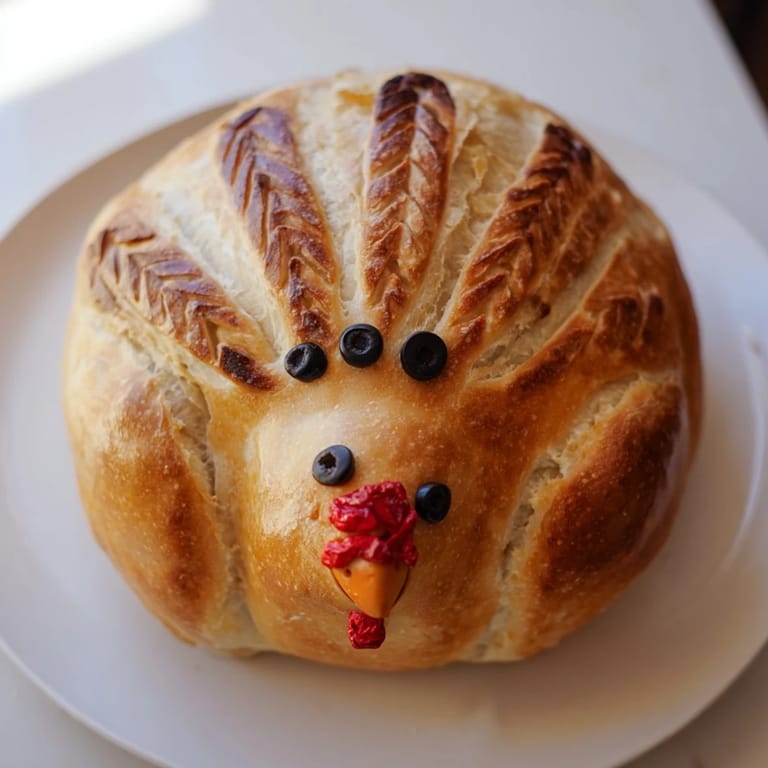
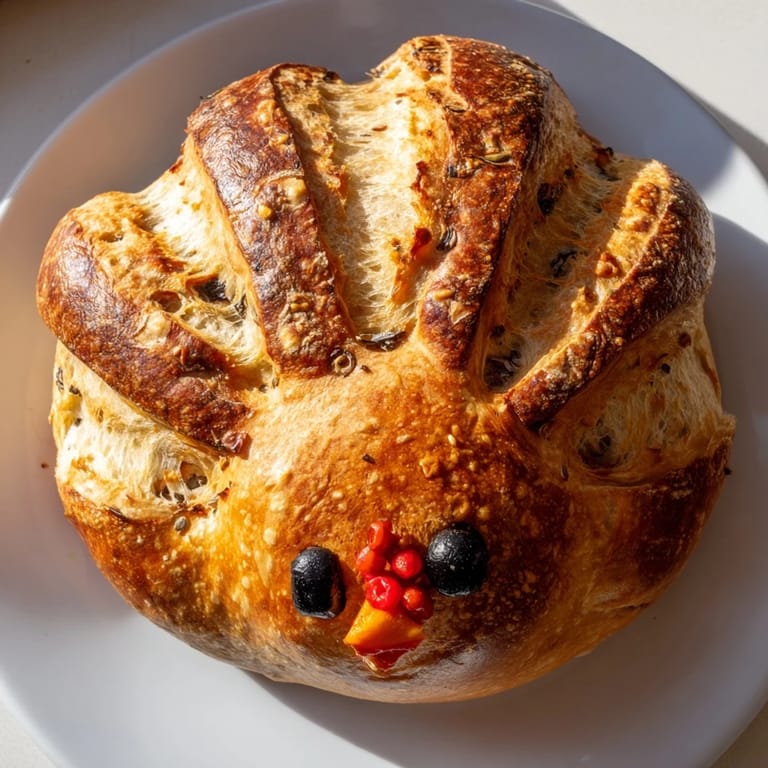
- Turn the dough onto a floured surface and divide it into one large oval for the body, a small round for the head, and several teardrop shapes for the tail feathers and wings. Arrange them on parchment paper, using a dab of water to attach the head and feathers to the body.
- Score and decorate:
- Use a sharp knife or lame to carve feather details into the dough, then press in peppercorns for eyes and add a small piece of red pepper or dyed dough for the wattle.
- Final proof:
- Cover the assembled turkey loosely and let it proof for 1 to 2 hours until it looks slightly puffy and relaxed.
- Preheat the oven:
- Set your oven to 230°C (450°F) and place a baking stone or steel inside to heat for at least 30 minutes.
- Apply egg wash and seeds:
- If you want a shiny crust, brush the turkey gently with beaten egg or plant milk, then sprinkle seeds over the feather sections for texture.
- Bake with steam:
- Slide the parchment with the turkey onto the hot stone, toss a few ice cubes into a pan on the oven floor to create steam, and bake for 20 minutes. Then lower the heat to 200°C (400°F) and bake another 20 minutes until the crust is deep golden and the loaf sounds hollow when tapped.
- Cool completely:
- Transfer the turkey to a wire rack and let it cool all the way before slicing. The crumb is still setting as it cools, and cutting too soon will make it gummy.
 Save
Save The first time I pulled this from the oven, I stood there staring at it like I'd just won something. My daughter peeked around the corner and whispered, It looks real, and for a second, I felt like I'd done something bigger than baking. It wasn't just about the bread. It was about creating a moment where food became memory, where the table felt a little more special, and where the work of my hands turned into something people wanted to gather around.
Shaping Tips for Beginners
If you've never shaped anything beyond a boule, start by practicing the body and head first, then add one or two tail feathers. You don't need a dozen feathers to make it recognizable. I've seen turkey loaves with just three feathers look stunning because the proportions were right and the scoring was confident. Use a bench scraper to move the pieces without tearing them, and remember that wet hands are your best tool for smoothing and attaching parts. The dough is forgiving, and if a feather falls off, just press it back on with a little water.
Flavor Variations
I've folded fresh rosemary and cracked black pepper into the dough during the last stretch and fold, and it made the whole loaf smell like a holiday herb garden. You can also add a handful of grated Parmesan for a savory, umami boost, or brush the finished loaf with garlic butter right when it comes out of the oven. If you want sweetness, a touch of honey in the dough and a sprinkle of everything bagel seasoning on top creates a balance that's hard to stop eating. Just don't add too many mix-ins or the dough won't hold its shape during proofing.
Serving and Storage
This bread is best served the day it's baked, while the crust is still crisp and the crumb is soft. Set it on a wooden board in the center of the table and let people tear into it with their hands. Leftovers keep for two days wrapped in a clean kitchen towel, and day-old slices make incredible toast or croutons. If you want to make it ahead, shape and proof the turkey, then cover it tightly and refrigerate overnight. Let it come to room temperature for about an hour before baking, and you'll still get a beautiful rise.
- Store at room temperature wrapped in cloth, not plastic, to keep the crust from softening
- Freeze sliced bread for up to a month and toast straight from the freezer
- Serve with herb butter, olive oil and balsamic, or alongside a big pot of soup
 Save
Save Every time I make this, someone asks for the recipe, and I tell them it's easier than it looks. The truth is, shaping a turkey loaf taught me that bread doesn't have to be serious or perfect to be wonderful.
Recipe FAQ
- → What is the ideal fermentation temperature for this sourdough?
Bulk ferment at room temperature between 21–23°C (70–74°F) for 5–7 hours until the dough doubles and becomes bubbly. Temperature consistency ensures proper gluten development and flavor complexity.
- → How do I achieve the best oven spring and crust?
Preheat a baking stone or steel thoroughly inside the oven at 230°C (450°F). Bake for 20 minutes with steam to develop crust, then reduce heat to 200°C (400°F) for the remaining 20 minutes. The steam helps the loaf expand before the crust sets.
- → Can I make this loaf vegan?
Yes, this loaf is naturally vegan. Simply skip the egg wash or substitute with plant-based milk brushed on before baking for a subtle shine. All other ingredients are plant-based, including the sourdough starter.
- → How do I shape the turkey design?
After bulk fermentation, shape the dough into one large oval for the body, a smaller round for the head, and several teardrop shapes for tail feathers and wings. Score feather details with a sharp knife, then attach decorative elements with water as adhesive.
- → What can I use to enhance flavor?
Mix herbs like rosemary or thyme directly into the dough during the autolyse phase. You can also experiment with seeds as toppings—poppy, sesame, or flax add texture and visual interest to your turkey design.
- → How should I cool and store this loaf?
Cool completely on a wire rack before serving to prevent condensation that softens the crust. Store in a paper bag at room temperature for up to 2 days, or freeze for longer storage. Slice with a serrated knife to preserve the crumb structure.