 Save
Save Last December, I was staring at my kitchen counter wondering how to make a simple appetizer feel like something intentional. The idea hit me while looking at the frost patterns on my window—why not build a board that literally captures the solstice moment, split between darkness and light? I grabbed Brie, olives, figs, and whatever else looked striking, and something clicked. The board became a conversation starter before anyone even tasted it, and that felt like the whole point.
My neighbor brought her teenage kids over one winter evening, and I served this board almost as an afterthought. One of them went straight for the dark side, the other demolished the light side pears, and they actually had a spirited debate about which half was better. Watching them argue over cheese and fruit felt like a small victory—they were engaged, happy, and I'd barely lifted a finger. That's when I realized this board had found its purpose.
Ingredients
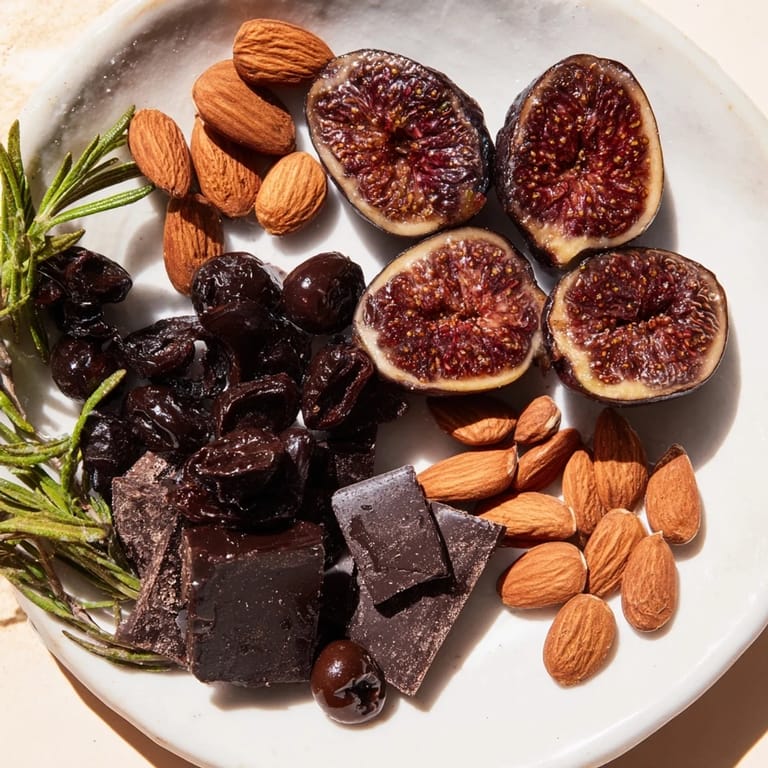
- Kalamata olives: These bring a deep, briny richness that anchors the dark side, so pit them fresh or buy pre-pitted to save yourself ten minutes of tedious work.
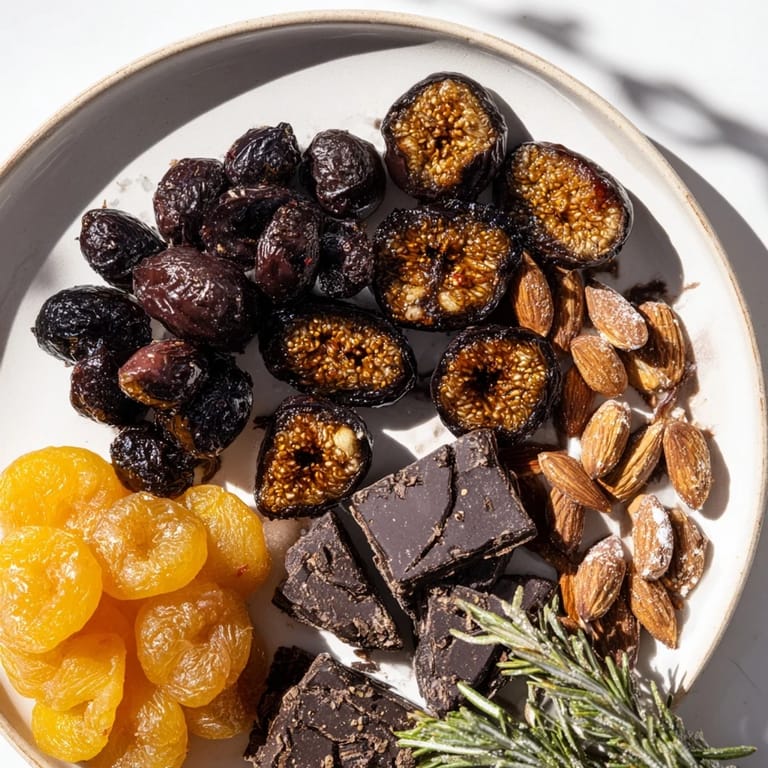
- Oil-cured black olives: They're denser and earthier than Kalamatas, adding texture contrast and an almost wine-like depth to the savory half.
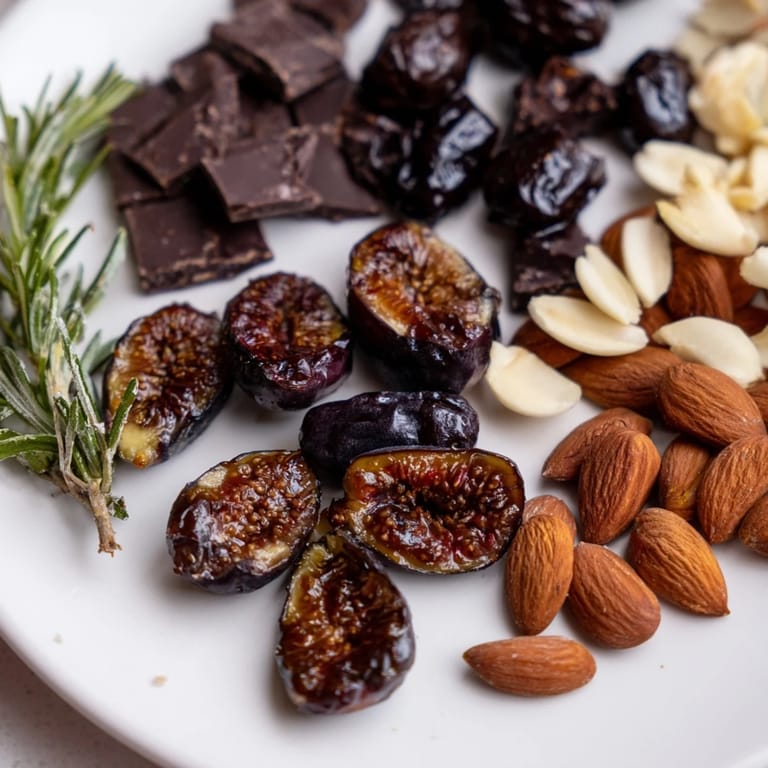
- Dried mission figs: Halve them so guests don't have to wrestle with whole fruit, and their natural sweetness bridges the gap between savory and sweet beautifully.
- Fig jam: A spoonful scattered on the dark side gives people a dipping option and doubles down on that fig story you're telling.
- Dark chocolate: Broken into uneven pieces feels more intentional than neat squares, and it catches people by surprise in a cheese board context.
- Roasted almonds: Buy them roasted and salted so they're ready to go, or roast raw ones yourself and taste the difference in nuttiness.
- Fresh rosemary: One sprig isn't just garnish—it's a visual anchor and releases herbaceous notes when people lean close to the board.
- Ripe Brie: This is your money ingredient on the light side, so let it sit at room temperature for at least 30 minutes before serving so people actually want to spread it.
- Ripe pears: Slice them just before assembly to avoid browning, and lay them in a slight overlap so they look intentional rather than scattered.
- Honeycomb: If you can find it, get it—the visual honeycomb structure and the slight crunch is worth seeking out, though honey drizzle works when you're in a pinch.
- Toasted walnuts: Toast them yourself if you have five minutes; the aroma that fills your kitchen is half the reason to make this board.
- Seedless green grapes: They're a pop of freshness and color, and their delicate sweetness plays nicely against Brie's creamy richness.
- Fresh thyme: Scatter sprigs across the light side like you're being intentional about it, because you are.
- Baguette slices: Toast them lightly if they're going to sit out, or serve soft if you're plating everything fresh and hot in the moment.
- Assorted crackers: Pick two or three varieties—a thin crisp, something herbed, something neutral—so people have choices without overwhelming the board.
Tired of Takeout? 🥡
Get 10 meals you can make faster than delivery arrives. Seriously.
One email. No spam. Unsubscribe anytime.
Instructions
- Set your stage:
- Find your board—something large enough that both sides get breathing room, at least 16 inches across. Lay down a line of fresh rosemary sprigs right down the middle to mark your divide, or use a row of crackers if rosemary feels too fussy for your mood.
- Build the dark side:
- Cluster the olives in one corner like they own that space, scatter the halved figs nearby, then add the chocolate pieces where they'll catch light. Leave small gaps between ingredients so the board shows through—it feels more intentional than a packed, cramped arrangement.
- Fill in the dark details:
- Spoon fig jam into a small ramekin or right onto the board if you're feeling bold, then sprinkle roasted almonds into the negative space like finishing touches. Lay the rosemary sprig across the top as a final visual punctuation.
- Arrange the light side:
- Place your Brie wedge or wheel as the anchor point, then fan the pear slices out from it like they're introducing themselves. Position walnuts and grapes in separate clusters so people's eyes have something to follow.
- Balance the brightness:
- Drizzle or place honeycomb where it catches light, scatter fresh thyme across the lighter ingredients so it looks like someone cared about the arrangement. Step back and look at the whole thing—your eyes should travel easily from one side to the other.
- Add your accompaniments:
- Arrange baguette slices and crackers along the center line or on a separate small plate, leaving your artistic arrangement intact and giving people clear access to tools for spreading and scooping.
- Serve with intention:
- Bring the board out at room temperature so every ingredient tastes like itself, and watch people's faces as they take in the whole composition before they even reach for food.
 Save
Save There's something about watching a board like this disappear that feels different from watching people eat a plated meal. They linger, they pick at it, they come back to try what someone else was eating, and the board becomes this shared experience rather than just fuel. That's when I understood why people bring cheese boards to gatherings—it's not about the ingredients, it's about the permission to slow down and enjoy being together.
The Story Behind the Solstice
The winter solstice has always felt like the year's pivot point, that moment when darkness is maximum but light officially starts returning. Building a board around that duality felt like a way to acknowledge both at once—the rich, dark, grounding side representing the season's depth, and the fresh, bright side representing hope and coming spring. Every time I make it, I'm reminded that the best food tells a story, even if that story is just seasonal balance on a wooden board.
Pairing and Presentation
Serve this with a dry sparkling wine if you want effervescence cutting through the richness, or a light red if you're leaning into the coziness of winter. The beauty of a board like this is that it works for a kitchen gathering or a formal dinner party with almost no adjustment needed. Whatever the setting, let people serve themselves and discover their own favorite combinations—half the fun is the exploration.
Make It Your Own
This board is a template, not a rule. If you have access to good Roquefort, swap it for the Brie and lean into the sharper side of cheese. If figs aren't your thing, dried apricots bring similar sweetness and a different color story. The core idea—balance, contrast, intention—stays the same no matter what you're working with in your kitchen.
- Add prosciutto to either side if you're feeding meat eaters, or keep it vegetarian as written and nobody misses it.
- Roast your own almonds and walnuts if you have the time; the smell in your kitchen is worth the five minutes it takes.
- Make this board the night of, not hours ahead, so every ingredient tastes fresh and bright when people actually eat it.
 Save
Save This board is less about recipe precision and more about intention and presence. Every time you make it, you're giving people permission to slow down and enjoy something beautiful together.
Recipe FAQ
- → How do you create the divided sides on the board?
Use a sprig of rosemary or a line of crackers to separate the savory dark elements from the bright, fresh items on the board.
- → What can I substitute for brie on the light side?
Try creamy cheeses like Camembert or Roquefort for a similar texture and flavor profile.
- → Can I add meat to this board?
Yes, prosciutto slices can be added to either side but omit them for a vegetarian option.
- → What pairs well as a drink accompaniment?
A dry sparkling wine or a light-bodied red wine complements the board’s contrasting flavors nicely.
- → Are there any common allergens present?
The board contains milk from cheese, tree nuts like almonds and walnuts, and gluten from the baguette and crackers unless gluten-free options are used.