 Save
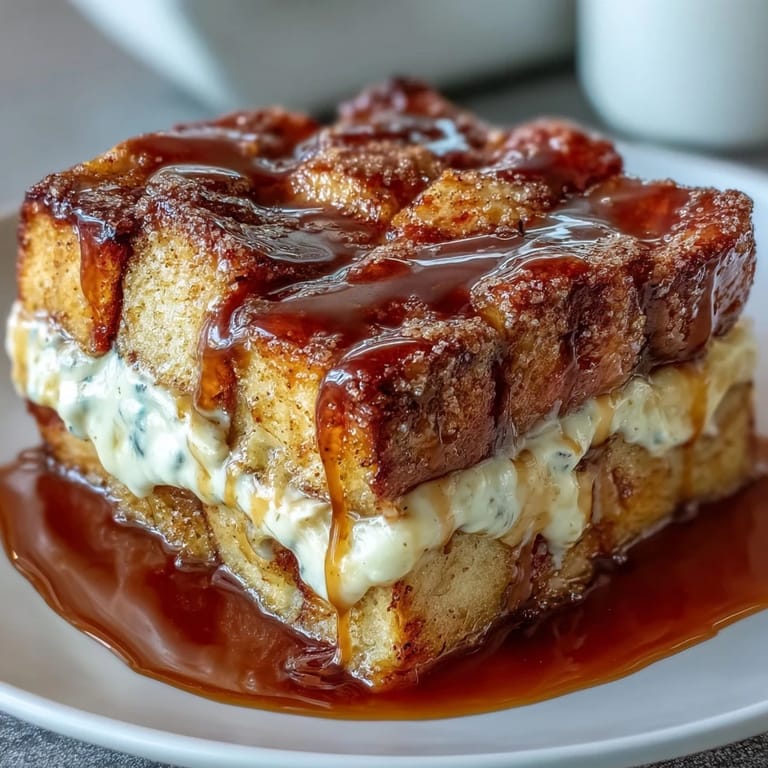
Save My sister called me the night before her birthday brunch and asked if I could bring something that would make everyone forget about store-bought pastries. I had this moment of inspiration standing in my kitchen at 10 PM, realizing I had brioche going stale and cream cheese in the fridge—suddenly this caramel cream cheese French toast casserole felt inevitable. What started as problem-solving became the dish I now make whenever I need to impress without the morning stress.
I served this at a winter holiday open house where people were half-asleep and skeptical about brunch at 11 AM, and watching their faces when that first bite hit—creamy, caramelized, buttery—was worth every minute of prep. Someone actually asked for the recipe before they'd finished their plate, which never happens at my house.
Ingredients
- Brioche or challah bread (1 loaf, about 500 g, cut into 1-inch cubes): This isn't just bread—it's your foundation for soaking up custard without falling apart, and stale pieces work even better because they have less moisture to begin with.
- Cream cheese (225 g/8 oz, softened): Softening it first makes all the difference; it spreads into creamy pockets rather than hard lumps that won't integrate.
- Eggs (6 large): These bind everything together and create that custardy texture that makes this feel luxurious rather than just bread with sauce.
- Whole milk (360 ml/1½ cups): It tempers the richness while allowing the custard to soak deep into every cube.
- Heavy cream (120 ml/½ cup): This is your luxury ingredient—it creates that silky texture and prevents the custard from feeling watery or thin.
- Granulated sugar (120 g/½ cup): Balanced sweetness that lets the caramel shine without competing.
- Pure vanilla extract (2 tsp): Use the real thing; imitation fades during baking and you'll taste the difference.
- Ground cinnamon (½ tsp): A subtle warm note that makes people ask what that wonderful spice is.
- Salt (pinch): Never skip this—it balances sweetness and deepens every flavor in the dish.
- Light brown sugar (200 g/1 cup, packed): Brown sugar caramel tastes deeper and more complex than white sugar versions.
- Unsalted butter (120 g/½ cup): Unsalted lets you control the salt and taste the pure caramel flavor without butter competing.
- Heavy cream for caramel (60 ml/¼ cup): This mellows the intensity and creates that silky drizzle texture.
Tired of Takeout? 🥡
Get 10 meals you can make faster than delivery arrives. Seriously.
One email. No spam. Unsubscribe anytime.
Instructions
- Make the caramel foundation:
- In a saucepan over medium heat, melt brown sugar and butter together, stirring constantly so it becomes smooth and bubbling after about 2–3 minutes. Remove from heat, stir in heavy cream until fully combined, then pour this golden sauce into the bottom of your greased baking dish—this is your flavor anchor.
- Layer the bread:
- Spread half the brioche cubes evenly over that caramel layer, making sure they're distributed so every spoonful gets some caramel contact. You're building architecture here, not just throwing bread in.
- Dollop the cream cheese:
- Beat the softened cream cheese until smooth, then drop spoonfuls over the first bread layer, spreading gently with a knife. Leave some little dollops—they'll melt into creamy pockets rather than a flat layer.
- Top with remaining bread:
- Add your second layer of bread cubes, pressing down gently so everything nestles together. This creates your structure for soaking.
- Make the custard mixture:
- In a large bowl, whisk together eggs, milk, heavy cream, sugar, vanilla, cinnamon, and salt until completely smooth—no egg streaks or lumps. Pour this evenly over everything, then press down gently with the back of a spoon so the bread absorbs the custard throughout.
- Overnight chill:
- Cover tightly with plastic wrap and refrigerate overnight (or at least 6 hours)—this is non-negotiable because the bread needs time to drink in all that custard so it becomes custardy inside rather than crispy. You're essentially making bread pudding happen while you sleep.
- Rest before baking:
- Preheat your oven to 175°C (350°F), then let the casserole sit at room temperature for 20–30 minutes. Cold casseroles bake unevenly, so this rest lets everything come to the same temperature.
- Add the cinnamon sugar top:
- Mix granulated sugar and cinnamon in a small bowl, then sprinkle evenly over the casserole. This creates that crackly, sweet crust while it bakes.
- Bake to golden perfection:
- Bake uncovered for 40–45 minutes until the top is puffed and golden and the center feels set when you gently jiggle the pan. If the top browns too quickly, tent it loosely with foil to let the inside finish cooking.
- Cool and serve:
- Let it cool for 10 minutes (this helps it set so you can cut clean portions), then serve warm with extra caramel sauce or fresh berries if you're feeling generous. That 10 minutes feels eternal but it's worth the wait.
 Save
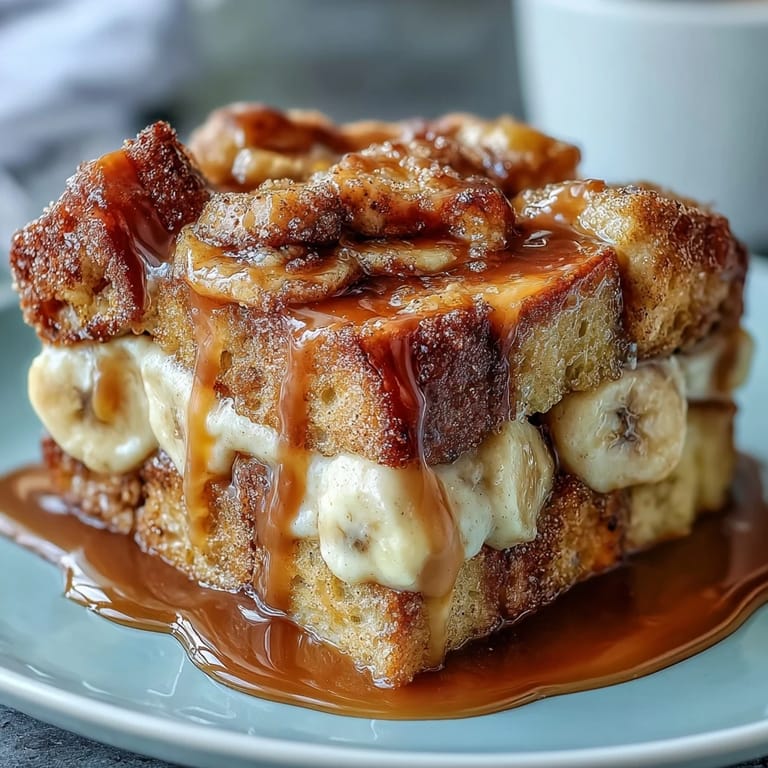
Save I made this last Easter for my in-laws, and my mother-in-law actually asked to use my kitchen to make it herself the next morning because she wanted it again. That's when I knew it wasn't just a recipe—it was something that made people feel cared for, which is really what brunch is about anyway.
Why Stale Bread Changes Everything
Most people think stale bread is a kitchen failure, but in casseroles it's a superpower. Fresh brioche is so tender it practically dissolves when it meets liquid, while bread that's been sitting out for a day has structure—it soaks up the custard without losing its shape, creating that perfect texture where the outside is caramelized and custardy and the inside stays bread-like. I used to buy fresh bread for this dish until I realized I was working against myself.
The Caramel Timing Secret
Making caramel feels intimidating until you realize it's just sugar and butter having a brief conversation. The moment it starts bubbling vigorously is when you add cream—too early and the cream cools it down without thickening, too late and you're past the point of no return. I've learned that 2–3 minutes of constant stirring is your sweet spot, and the second you see bubbles dancing across the surface, that's your cue to pull back and add the cream.
Make It Your Own
This casserole is a canvas, and I've experimented with it enough times to know what works. Some people add pecans or walnuts between the layers for crunch, or swap half the heavy cream for half-and-half if they want something lighter without losing creaminess. Fresh berries or a mimosa on the side transforms it from indulgent breakfast into something you'd order at a fancy brunch spot.
- Chopped nuts between the bread layers add texture without overpowering the caramel and cream cheese.
- A splash of bourbon or dark rum in the caramel sauce makes this feel like a grownup dessert pretending to be breakfast.
- Serve with a small ramekin of extra caramel for drizzling because people always want more than you expect.
 Save
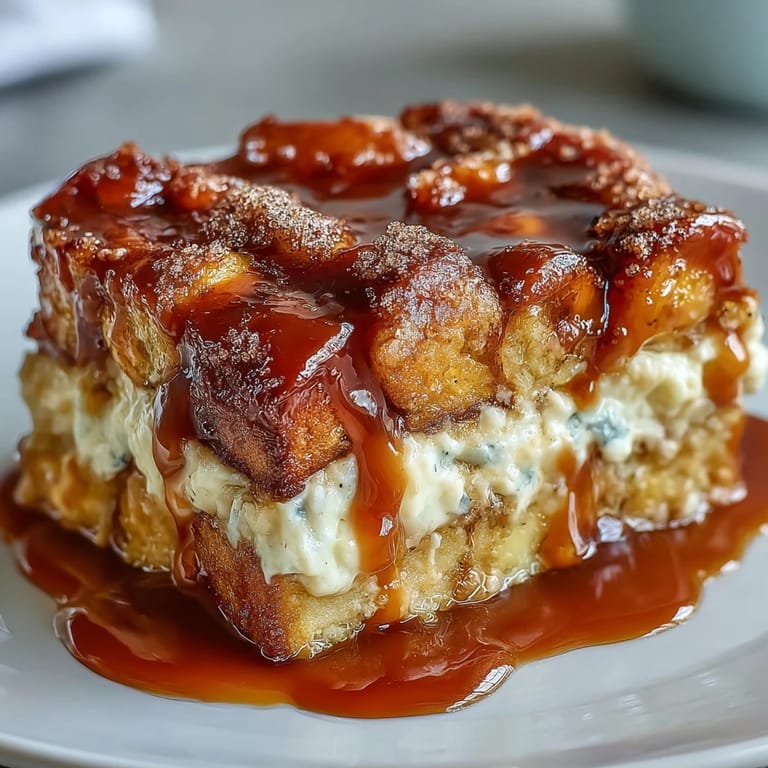
Save This casserole has become my go-to when I want to feed people something that tastes like love tastes—rich, warm, a little bit indulgent, and completely worth waking up for. Make it once and you'll understand why it's in regular rotation at every special breakfast in my house.
Recipe FAQ
- → Can I use different bread besides brioche?
Yes, challah works equally well due to its similar rich texture. French bread or thick-cut sandwich bread can be substituted, though the final result may be slightly less tender. Stale bread actually absorbs the custard better, so this is perfect for using up day-old loaves.
- → How long can I refrigerate the assembled casserole?
The assembled casserole needs at least 6 hours to properly absorb the custard, but can refrigerate up to 24 hours before baking. The bread becomes more tender and flavorful with longer soaking time. Just let it sit at room temperature for 20-30 minutes before baking.
- → Can I freeze this for later?
Assemble the casserole completely, wrap tightly, and freeze for up to 2 months. Thaw overnight in the refrigerator, then bring to room temperature before baking as directed. Alternatively, bake first, cool completely, and freeze individual portions for quick breakfast reheating.
- → Why did my casserole turn out soggy?
Sogginess usually means the bread wasn't allowed to absorb the custard long enough, or the ratio of liquid to bread was off. Ensure you're using the full loaf called for and pressing gently to help absorption. Also verify your oven temperature is accurate with an oven thermometer.
- → Can I make individual servings instead of one large casserole?
Absolutely. Portion the soaked bread and custard mixture into greased ramekins or muffin tins. Reduce baking time to 25-35 minutes depending on size. This creates elegant single-portion servings perfect for brunch parties or meal prep throughout the week.