 Save
Save I discovered The Paper Crane while experimenting with charcuterie one evening, trying to turn a simple spread into something my guests would actually remember. My hands were folding these thin slices of prosciutto almost without thinking, and suddenly they resembled wings. That's when it clicked—why arrange meat and crackers on a board when you could tell a story with them instead? The crane felt like the perfect subject: elegant, impossible-looking, yet entirely achievable with just patience and sharp knives.
The first time I served this was at a dinner party where the table conversation had gone flat. I set this down in the center, and I watched the mood shift entirely. People leaned in, phones came out, and suddenly everyone was asking me how I made it. That's when I realized this isn't really about the food—it's about the moment of surprise and delight you create when something ordinary transforms into unexpected art.
Ingredients
- Prosciutto: Buy it sliced paper-thin at the deli counter, not pre-packaged, because it folds infinitely better and costs about the same.
- Smoked turkey breast: This provides a lighter, contrasting layer that keeps the crane from feeling too heavy or rich.
- Bresaola or pastrami: The star of your wings—its darker color creates that dramatic sweep when arranged, and the texture holds folds beautifully.
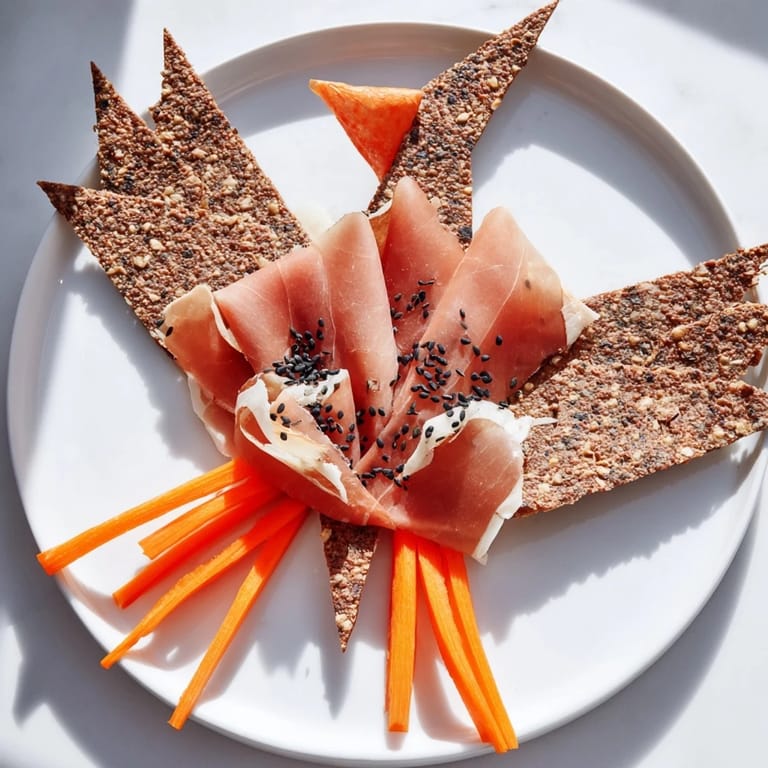
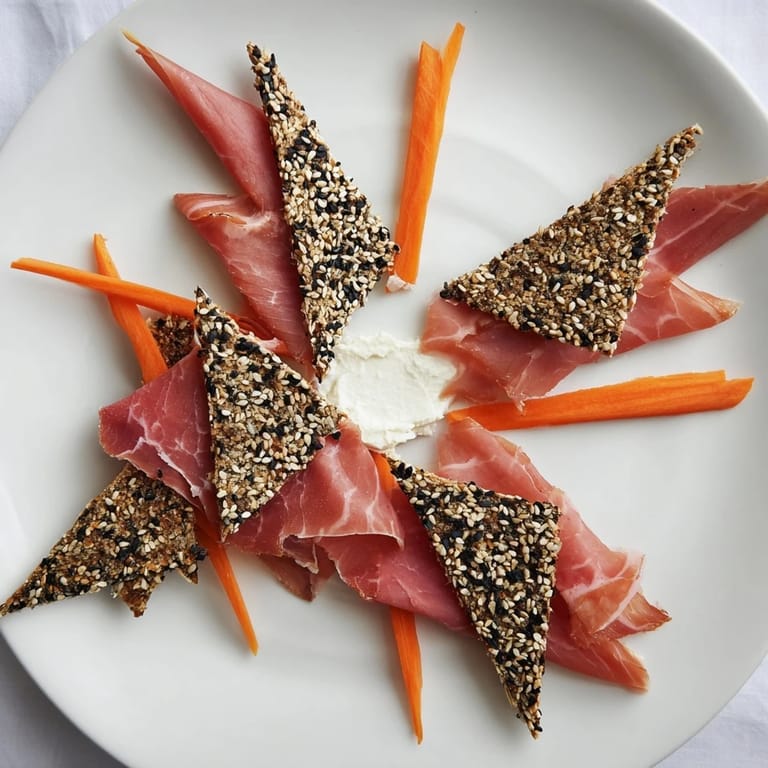
- Triangular whole-grain crackers: They're structural and visual; their angles echo the geometry of origami and make the crane instantly recognizable.
- Black sesame or poppy seed crackers: A smaller accent that adds depth and variety without complicating the design.
- Chives: Fresh, delicate, and perfect for tail feathers or wing details without adding weight.
- Carrot: A vegetable peeler creates those impossibly thin strips that become the crane's neck, beak, and legs with a naturalistic curve.
- Cream cheese: Your adhesive and anchor—it holds everything in place and adds a subtle richness that ties flavors together.
- Black sesame seeds: A tiny detail that reads as an eye and adds sophisticated texture and nuttiness to the overall composition.
Tired of Takeout? 🥡
Get 10 meals you can make faster than delivery arrives. Seriously.
One email. No spam. Unsubscribe anytime.
Instructions
- Prepare your carrot ribbons first:
- Run your vegetable peeler along the carrot lengthwise several times until you have thin, flexible strips. Cut a few of these into narrower pieces for the beak and legs. Set them aside on a damp paper towel so they stay pliable—they'll curl slightly, which adds character and movement to the final piece.
- Build the crane's body:
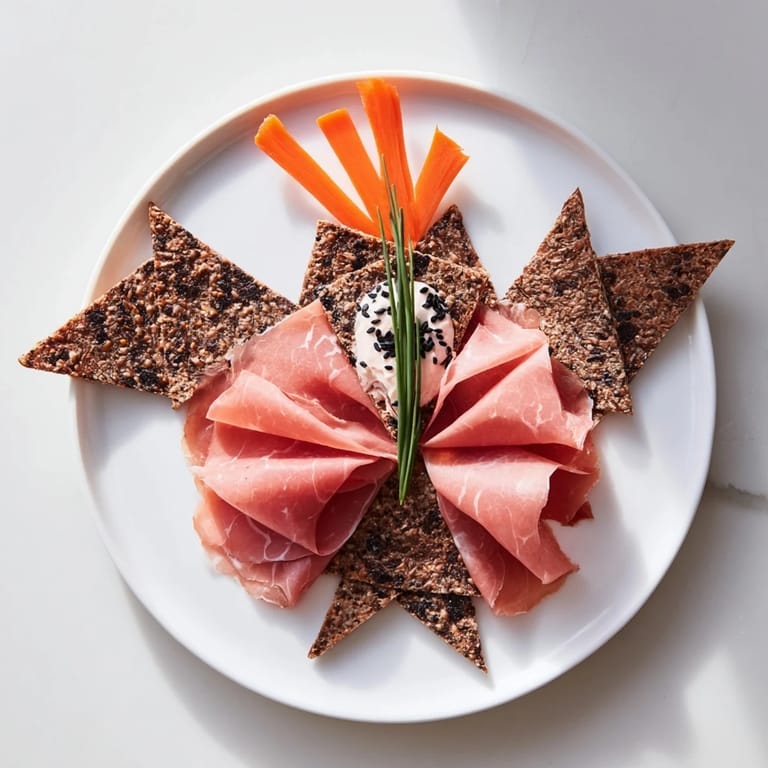
- On your platter, fold slices of prosciutto and smoked turkey into sharp triangles, slightly overlapping them to create dimension and texture. Think of it like building a small origami sculpture rather than just arranging food. Each fold should feel intentional, layering them to suggest a three-dimensional form rising from the plate.
- Create dramatic wings:
- Fold your bresaola or pastrami into triangles as well, then fan them upward and outward in a sweeping motion that suggests flight. The darker meat creates a striking visual contrast, so play with the angles until the silhouette reads as movement and grace.
- Frame with crackers:
- Arrange triangular crackers beneath and alongside your meat sculpture, using their sharp lines to reinforce and define the crane's outline. This is like adding a frame to a painting—the crackers ground the design and make the overall shape unmistakable.
- Anchor with cream cheese:
- Use small dabs of cream cheese to attach your carrot strips as the crane's neck, beak, and legs. The cream cheese acts as both adhesive and flavor bridge, binding everything together while adding subtle richness.
- Season the details:
- Sprinkle black sesame seeds where an eye would naturally sit and scatter more across the wing area for texture and visual interest. These tiny seeds add sophistication and hint at a subtle nuttiness.
- Finish and serve:
- Step back and look at what you've made. If you're not serving immediately, cover loosely with plastic wrap and refrigerate for up to an hour. The piece will hold its structure beautifully and actually improve slightly as flavors meld.
 Save
Save One guest told me afterward that this dish reminded her why she loved cooking—not because it was complicated, but because it proved that beauty and precision could happen on a weeknight. That comment stuck with me more than any compliment ever has.
The Art of Minimal Cooking
This dish taught me that the most impressive appetizers aren't always the ones that require hours or heat. Sometimes the most memorable moments come from patience, arrangement, and intention. There's something almost meditative about folding these thin slices, watching them transform into shapes and silhouettes. Your hands move slowly, your mind settles, and by the time you finish, you've created something that looks far more complex than your actual effort invested.
Playing with Substitutions
The beauty of The Paper Crane is how adaptable it is to dietary preferences and what you have on hand. I've made it with smoked salmon for pescatarian guests—the pale pink and deeper salmon tones actually create a more subtle, refined crane. I've also experimented with thin slices of teriyaki tofu for vegetarian versions, and honestly, the way those slices fold and hold their shape is almost better than some of the meats. The structure remains, the artistry remains, only the ingredients shift.
Presentation Secrets for Maximum Impact
The key to this dish isn't just assembly—it's understanding how color contrast and negative space make the crane unmistakable even from across the room. The darker bresaola wings against lighter crackers create that visual punch immediately. Don't crowd the platter; let your crane breathe and command attention. The crackers aren't filler; they're essential framing that completes the silhouette and gives guests an easy entry point for eating.
- Choose a platter color that makes your meats pop—white or slate-gray work beautifully, while busy patterns compete with your design.
- Arrange everything about thirty minutes before guests arrive so you're not stressed during final touches.
- Serve it as the conversation starter it's meant to be, not hidden away on a side table.
 Save
Save The Paper Crane is proof that the most memorable dishes aren't always the most complicated ones. They're the ones that make people pause, smile, and feel genuinely delighted by what you've created.
Recipe FAQ
- → What meats work best for this appetizer?
Thinly sliced prosciutto, smoked turkey breast, and bresaola or pastrami provide a rich and varied flavor profile that complements the crisp crackers well.
- → Can I substitute the crackers used?
Yes, whole-grain triangular crackers are ideal, but flavored options like rosemary or black pepper can add depth to the presentation and taste.
- → How do I create the crane shape with the meats?
Fold slices of cured meats into sharp triangles and layer them to simulate the crane’s body and wings, using upward fanning motions for the wings' silhouette.
- → Are there vegetarian alternatives for this appetizer?
Smoked salmon or tofu slices can replace cured meats to cater to pescatarian or vegetarian preferences without compromising texture and presentation.
- → What garnishes enhance the visual appeal?
Carrot strips shaped for the beak and legs, chives for tail feathers or wing details, and a sprinkle of black sesame seeds add finishing touches that highlight the design.