 Save
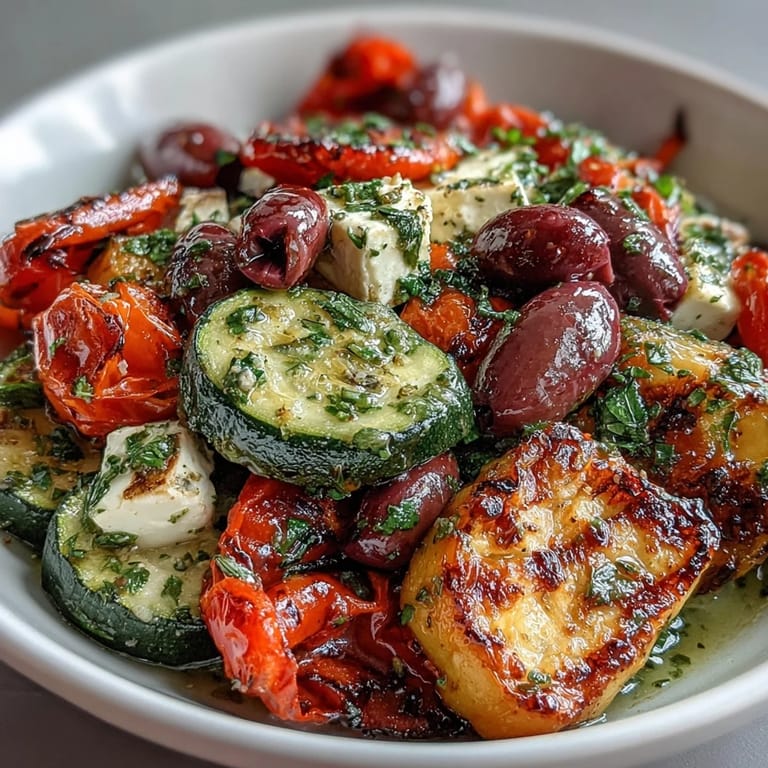
Save There's something magical that happens when you roast Greek salad vegetables instead of serving them raw—the kitchen fills with this warm, caramelized aroma that makes you want to gather everyone around immediately. I discovered this by accident one summer when I had too many vegetables from the farmers market and decided to throw them on a hot sheet pan while prepping everything else. The result was so unexpectedly delicious that it became my go-to move whenever I wanted to impress without fussing, and now it's the version people actually request.
I'll never forget serving this to my neighbor who was skeptical about warm salad—she took one bite and her whole expression changed, and suddenly we were standing in my kitchen debating whether the feta or the caramelized peppers were the real star. That moment taught me that sometimes the best food discoveries happen when you're willing to break the rules a little, even with something as established as Greek salad.
Ingredients
- Red and yellow bell peppers: These sweeten considerably when roasted, developing almost jammy notes that anchor the whole dish—cut them large enough that they don't disappear into the pan.
- Red onion: Cut into wedges so they stay together and develop caramelized edges; they add a gentle sweetness that balances the acidity of the dressing.
- Zucchini and eggplant: Both benefit from the high heat, becoming tender and slightly golden—the eggplant especially soaks up the olive oil beautifully.
- Cherry tomatoes: Halve them so they collapse slightly and concentrate their flavor, almost like making a quick roasted tomato sauce on the pan.
- Extra-virgin olive oil: Use good quality here since it's both for roasting and the dressing; it's really the backbone of Mediterranean cooking.
- Kalamata olives: The briny punch they provide is essential—pit them yourself if possible, as it lets you control the size and avoid broken bits of pit.
- Feta cheese: Crumble it generously over the warm vegetables so it softens slightly and mingles with the dressing; this is where the magic happens.
- Fresh parsley: Save this for garnish at the very end so it stays vibrant green and adds a fresh herbal note that cuts through the richness.
- Lemon juice and red wine vinegar: The combination gives you brightness without being one-note; together they keep the dressing balanced and prevent it from tasting thin.
- Dried oregano: A generous measure here is worth it—oregano and roasted vegetables are practically made for each other.
Tired of Takeout? 🥡
Get 10 meals you can make faster than delivery arrives. Seriously.
One email. No spam. Unsubscribe anytime.
Instructions
- Heat your oven and prepare the stage:
- Get that oven preheating to 220°C (425°F) and line your baking sheet with parchment paper—this one small step saves you from sticking and makes cleanup nearly effortless. A hot oven is key because it creates those caramelized edges we're after.
- Toss vegetables with oil and seasoning:
- Arrange your chopped vegetables on the sheet, drizzle with 2 tablespoons of olive oil, then sprinkle generously with salt and pepper and toss everything until it's evenly coated. Don't be shy with the seasoning—the vegetables need it to taste like something on their own, not just a base layer.
- Roast until golden and tender:
- Slide the pan into the oven and let them roast for about 25 to 30 minutes, stirring once halfway through so everything caramelizes evenly. You'll know they're ready when the edges start turning golden and you can pierce them easily with a fork.
- Build your dressing while vegetables roast:
- In a small bowl, whisk together the 3 tablespoons of olive oil, red wine vinegar, lemon juice, oregano, Dijon mustard, and grated garlic until it looks emulsified and creamy. Taste it and adjust the salt and pepper—this is your chance to balance everything the way you like it.
- Arrange the cool vegetables as your base:
- Spread those cucumber slices onto a large platter or into a salad bowl, creating a refreshing cushion that contrasts beautifully with the warm roasted vegetables. They stay crisp while everything else gets its warmth.
- Layer in the roasted vegetables:
- Once they're out of the oven and still warm, pile the roasted vegetables right on top of the cucumbers, letting them settle naturally rather than trying to arrange them too precisely. The warm vegetables will release their flavors into the salad.
- Scatter olives and feta, then dress:
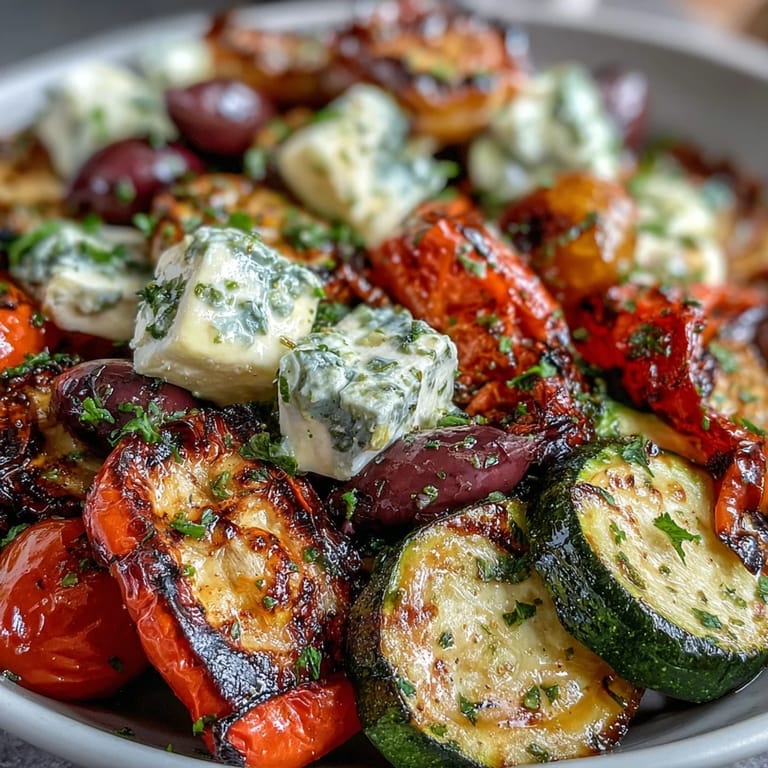
- Sprinkle the Kalamata olives and crumbled feta over everything, then drizzle the dressing across the whole thing and finish with a generous handful of fresh chopped parsley. Toss gently—you want to combine everything without crushing the vegetables—and serve it warm or let it cool to room temperature.
 Save
Save I served this at a dinner party where someone had just declared they'd "gone off raw salads," and watching them go back for seconds while gently defending their position against the other guests was pure joy. It's one of those dishes that somehow makes people feel like you've put more effort in than you actually did, which feels like the greatest kitchen hack of all.
The Warm Salad Moment
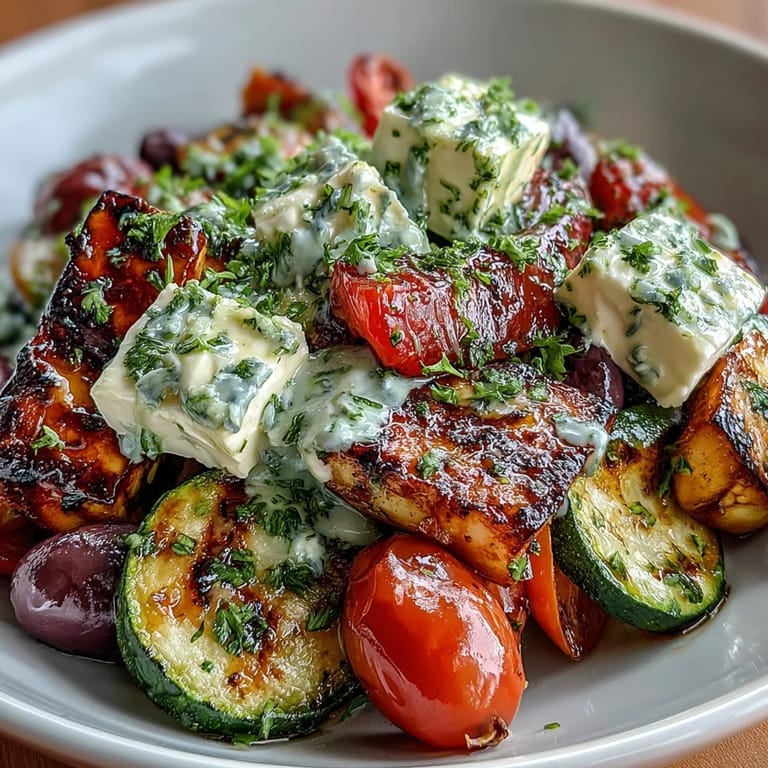
There's something quietly revolutionary about eating a warm salad—it changes your whole relationship with what a salad can be. The warmth carries the flavors differently, makes the feta soften just slightly, and creates this cozy feeling that raw vegetables, no matter how good, simply can't match. It feels lighter than a cooked main course but more substantial than a typical side salad, hitting this perfect middle ground that makes people genuinely satisfied rather than just nibbling politely.
Why Roasting Transforms Everything
Raw vegetables taste bright and crisp, which is wonderful, but roasting brings out a completely different dimension—the natural sugars in the peppers and onions caramelize and concentrate, the eggplant becomes silky rather than spongy, and even the tomatoes taste more tomatoey, if that makes sense. The high heat also creates a slight char on the edges, adding almost a savory depth that makes you feel like you're eating something more sophisticated than you actually have to work for. I've noticed that people who think they don't like eggplant often change their minds once they've had it roasted this way, all caramelized and golden and nothing like the mushy vegetable they remember from childhood.
Making It Your Own
This salad is genuinely forgiving and encourages you to play around based on what you have or what sounds good that day. You might add roasted mushrooms or potatoes for something heartier, throw in some capers for extra briny punch, or swap in sun-dried tomatoes if cherry tomatoes aren't at their peak. Here are a few quick thoughts that might help you personalize it:
- If you're in the mood for something earthier, mushrooms roast beautifully alongside the peppers and add a meaty texture that makes it more filling.
- Add a handful of capers for a sharp, salty note that plays nicely with the feta and olives without making the salad taste one-dimensional.
- Don't be afraid to double the parsley at the end—the fresh herbal quality is what keeps warm salad from feeling heavy.
 Save
Save This salad has quietly become my answer to almost every casual dinner because it's beautiful, tastes like you tried much harder than you did, and somehow makes everyone at the table feel a little bit better. Make it once and you'll understand why I reach for it again and again.
Recipe FAQ
- → Can I serve this salad cold?
Yes, this salad tastes delicious both warm and at room temperature. The roasted vegetables maintain their flavor even after cooling, making it perfect for meal prep or picnics.
- → What can I substitute for feta cheese?
You can use halloumi, ricotta salata, or a vegan feta alternative. For a dairy-free option, try adding extra olives or avocado cubes for creaminess.
- → How long do leftovers keep?
Store in an airtight container in the refrigerator for up to 3 days. The vegetables will soften slightly but the flavors will continue to meld beautifully.
- → Can I grill the vegetables instead?
Absolutely! Grilling adds a smoky char that complements the Mediterranean flavors. Cut vegetables into larger chunks and grill until tender with nice grill marks.
- → Is this suitable for meal prep?
Yes, roast vegetables and prepare dressing separately. Combine with fresh cucumber, olives, and feta just before serving to maintain the best texture contrast.