 Save
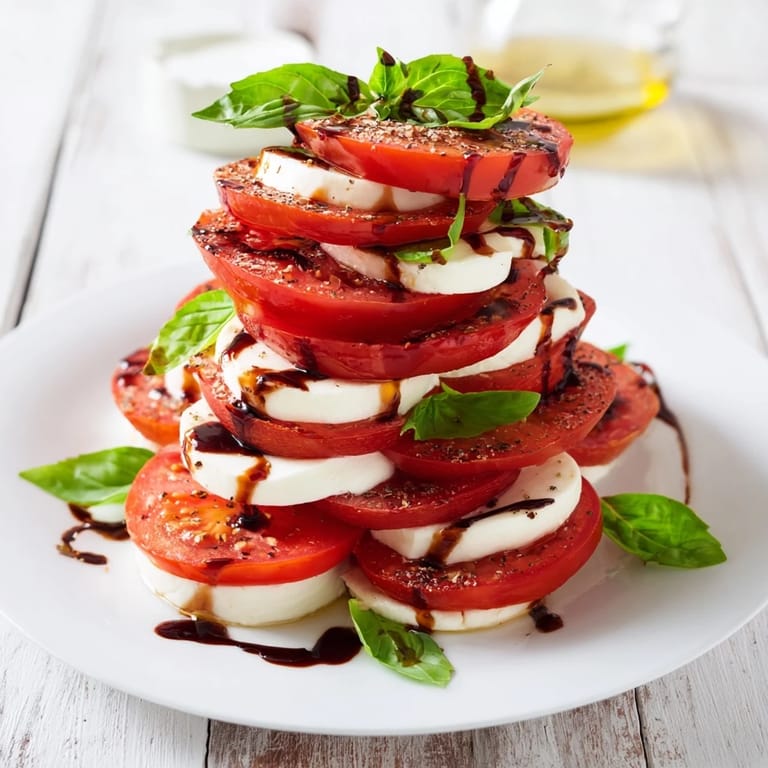
Save There's something about summer at the farmer's market that makes you want to build something beautiful with your hands. I picked up a basket of tomatoes still warm from the sun, their skins splitting with juice, and suddenly I wasn't thinking about salads—I was imagining them stacked tall, like little edible monuments. That's when the Tuscan Pillar was born: a way to celebrate each ingredient by standing them on their heads, a vertical love letter to the season.
I made this for a dinner party once when I was running an hour behind on everything, and halfway through the appetizer course, a guest asked for the recipe. I watched her face light up as she realized it required no cooking, no stress, just good ingredients and a sense of vertical ambition. That's when I knew this wasn't just food—it was permission to slow down and appreciate what summer actually tastes like.
Ingredients
- Fresh ripe tomatoes (4 medium): The backbone of this dish—look for ones that smell sweet and yield slightly to pressure, not the hard pink ones hiding in the back of the produce section.
- Fresh mozzarella cheese (250 g): This should feel pillowy and delicate, never rubbery; if you can only find dense mozzarella, this dish loses half its magic.
- Fresh basil leaves (1 small bunch): Tear them gently with your hands just before assembly so the bruises don't darken the green, and smell them—if they don't make you happy, grab new ones.
- Extra-virgin olive oil (2 tbsp): This is not the time to buy the cheap bottle; one good drizzle depends on quality.
- Balsamic glaze (2 tbsp): The thick, syrupy kind, not regular vinegar thinned out with hope.
- Sea salt and freshly ground black pepper: Finishing salts taste different than table salt, and pepper ground fresh from peppercorns changes everything.
Tired of Takeout? 🥡
Get 10 meals you can make faster than delivery arrives. Seriously.
One email. No spam. Unsubscribe anytime.
Instructions
- Slice everything to the same thickness:
- Use a sharp knife to cut your tomatoes and mozzarella into eight rounds each, aiming for about 1 cm thick—even slices stack better and look cleaner. If a slice cracks or crumbles, set it aside for snacking.
- Prepare your basil leaves:
- Rinse them gently, pat them completely dry with a paper towel, and leave them whole—you'll need their surface area as the glue holding this tower together.
- Build each pillar:
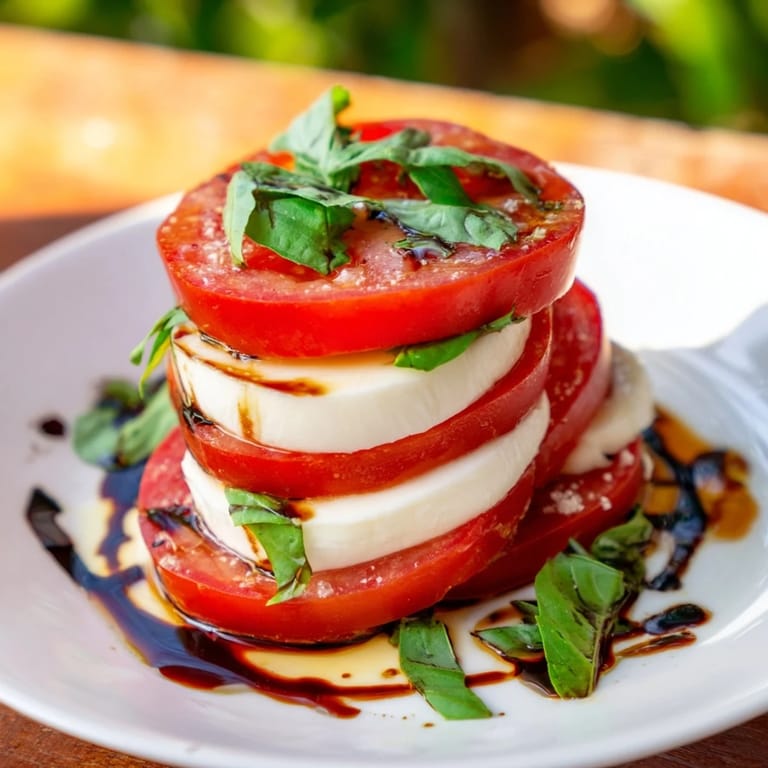
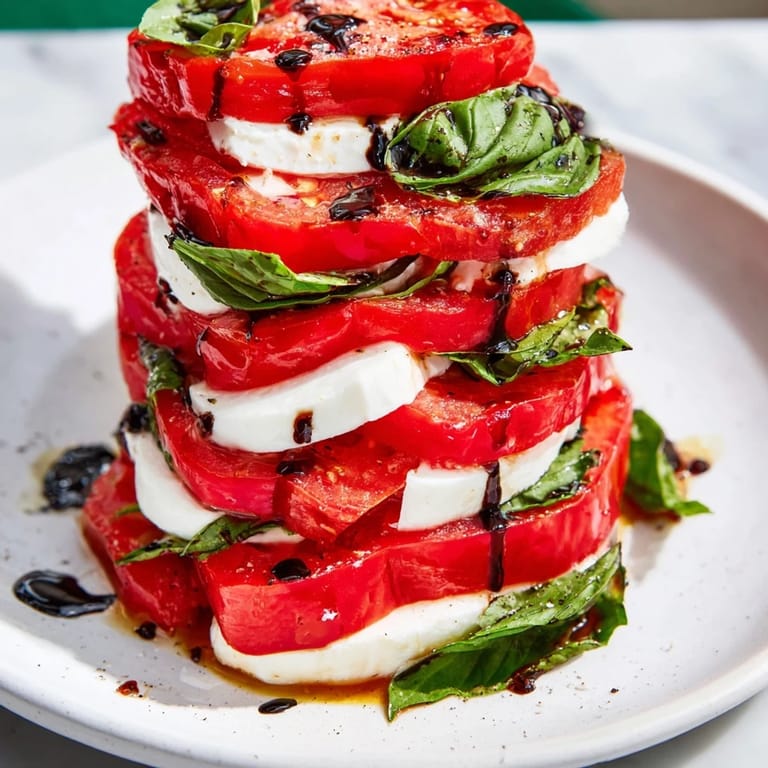
- Place a tomato round on your serving platter, crown it with a mozzarella slice, then a basil leaf, and repeat until you've built a stack about 3 to 4 layers high. The basil should always be on top of each mozzarella layer so it adheres slightly as it warms.
- Anchor your towers:
- Push a long toothpick or bamboo skewer straight down through the center of each stack—this keeps everything from toppling when your guests reach for them. It should go through cleanly without crumbling the layers.
- Finish with restraint:
- Drizzle each pillar with a teaspoon of olive oil and a teaspoon of balsamic glaze, letting it pool slightly at the base. Season generously with sea salt and fresh pepper, tasting as you go because this is your seasoning moment—there's no more cooking to hide behind.
- Serve immediately:
- These pillars are best eaten within 30 minutes while the mozzarella is still cool and the basil is vibrant, so plate them just before your guests arrive.
 Save
Save My neighbor tasted one of these at a casual dinner and told me it was the first time she'd actually tasted what a tomato was supposed to taste like. That moment—when someone realizes they've been eating tomato-shaped disappointments their whole life—that's the real reward of this recipe. It's not fancy cooking; it's just honesty on a plate.
Choosing Your Tomatoes
This recipe lives or dies by tomato quality, so hunt for heirloom varieties at the farmer's market if you can—they're usually softer, sweeter, and less watery than supermarket tomatoes. If you're making this in winter and your options are grim, honestly, wait for summer. But if you want to experiment, mixed heirlooms in reds, yellows, and striped varieties create a pillar that's almost too pretty to eat. Almost.
The Mozzarella Question
Fresh mozzarella from a specialty counter tastes completely different from the pre-packaged kind, and the difference matters here since these ingredients aren't hiding behind anything. If your only option is regular mozzarella, buy it anyway, but know you're working with a different dish. Burrata mozzarella is even more luxurious and melts slightly as it sits—your choice whether that's an upgrade or a mess.
Making It Your Own
The skeleton of this recipe is so simple that it begs for your personal riffs. Some people add a thin slice of prosciutto for salt and texture, others layer in roasted red peppers or thin slices of avocado. I once added a tiny dollop of pesto between layers and suddenly it was a completely different dish—still beautiful, still simple, but unmistakably mine.
- A whisper of aged balsamic vinegar under the glaze adds depth, though be conservative since it's pungent.
- A sprinkle of flaky sea salt on top catches the light and adds textural surprise.
- If your basil is hesitant to stick, a tiny drop of quality olive oil on the mozzarella helps it grip.
 Save
Save This recipe taught me that sometimes the most impressive food is just great ingredients stacked with intention. Serve it with cold wine and people will think you're showing off—which, really, you are.
Recipe FAQ
- → What type of tomatoes work best for this dish?
Medium ripe tomatoes with firm, juicy flesh are ideal to hold the stack’s shape. Heirloom tomatoes can add color variation.
- → Can I substitute fresh mozzarella with another cheese?
Fresh mozzarella is preferred for its creamy texture and mild flavor that complements tomatoes and basil, but burrata or bocconcini can be alternatives.
- → How should I assemble the tomato and mozzarella stacks?
Layer alternating slices of tomato and mozzarella with basil leaves in between, stacking 3 to 4 layers tall, then secure with a skewer.
- → What dressing enhances these stacks best?
A drizzle of extra virgin olive oil and balsamic glaze adds richness and tang, balancing the freshness of the ingredients.
- → Are there suggested seasonings to enhance flavor?
Sea salt and freshly ground black pepper are simple yet effective; you can also sprinkle dried oregano for added herbal notes.