 Save
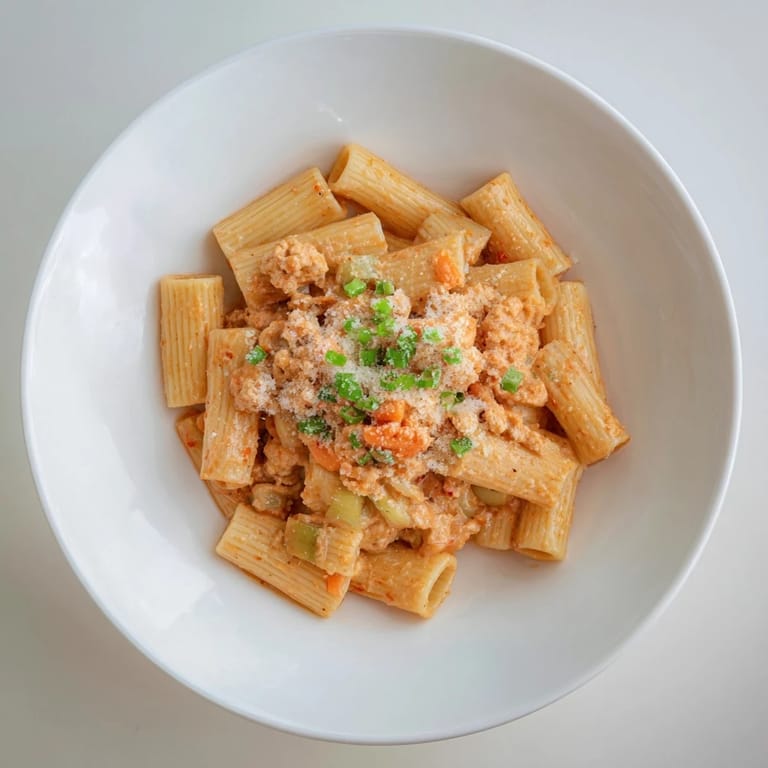
Save I discovered this dish by accident one rainy Tuesday, when I had leftover kimchi staring at me from the fridge and a craving for something warm and creamy. My Italian grandmother would probably shake her head at the combination, but something about the spicy tang of kimchi meeting the richness of a ragu felt like it was meant to happen. That first taste—umami layered on umami, heat cutting through cream—made me realize that the best meals often come from just throwing together what you love and seeing what sticks.
I made this for my neighbor last month, and the smell that drifted through our shared wall was so compelling she knocked on my door halfway through cooking, asking what I was making. Watching her eat that first forkful and seeing her eyes light up when the heat and the creaminess registered at the same time—that moment made me understand why food matters so much to people.
Ingredients
- Ground pork (300 g): The backbone of your ragu; use beef or a 50/50 blend if you prefer, but pork picks up the fermented kimchi flavors beautifully.
- Napa cabbage kimchi (200 g, chopped): Buy the kind packed in juice because that briny, funky liquid is liquid gold—don't drain it away.
- Kimchi juice (2 tbsp): This is the umami amplifier that ties everything together; measure it out separately so you don't forget it.
- Onion, carrot, and celery (1 medium, 1 medium, 1 stalk): The holy trinity chopped small, which means they soften fast and build flavor without being obvious.
- Garlic (2 cloves, minced): Mince it fine so it melts into the meat and blooms rather than sitting in chunks.
- Crushed tomatoes (400 g can): Don't skip the canned version here; fresh tomatoes won't give you the concentrated depth you need.
- Heavy cream (120 ml): Use full-fat or a plant-based alternative if you're going dairy-free, but don't use light cream because it breaks if you look at it wrong.
- Olive oil (2 tbsp): Good olive oil, the kind you'd actually want to taste, makes a difference in the soffritto.
- Soy sauce (1 tbsp): Another umami layer that deepens the whole dish and makes the kimchi taste even more complex.
- Rigatoni or penne (350 g): Shapes that trap sauce in their little ridges and tubes; linguine would slide right past the flavor.
- Gochugaru (1 tsp, optional): Korean chili flakes that add warmth without overpowering if you go easy, but start with half and taste as you go.
- Sugar (1 tsp): A small amount to balance the fermented bite and the acid from the tomatoes.
- Salt, black pepper (to taste): Season in layers, not all at the end, so the salt reaches everywhere it needs to.
- Scallions (2 tbsp, chopped): Raw, over the top, where they stay bright and oniony instead of cooking into oblivion.
- Parmesan cheese (25 g, grated): Optional but the sharp bite of good cheese against the spice is the tiny luxury that makes people ask for the recipe.
Tired of Takeout? 🥡
Get 10 meals you can make faster than delivery arrives. Seriously.
One email. No spam. Unsubscribe anytime.
Instructions
- Build your base:
- Heat the olive oil in a large skillet over medium-high heat and add the onion, carrot, and celery all at once. Sauté for about five minutes, stirring occasionally, until they soften and the onion turns translucent—you'll know it's working when the smell shifts from raw vegetable to something sweet and rounded.
- Wake up the garlic:
- Add the minced garlic and stir constantly for just one minute until it's fragrant and golden at the edges. Don't let it brown or it'll taste bitter.
- Brown your meat:
- Add the ground pork (or beef, or your blend) and cook for six to seven minutes, breaking it up as it cooks with a wooden spoon so it browns evenly instead of clumping. The meat should be cooked through and any liquid should be mostly evaporated.
- Introduce the kimchi:
- Stir in the chopped kimchi and the kimchi juice and let them sauté for three to four minutes, letting the fermented flavors mellow slightly and begin to bond with the meat. This is when the kitchen starts to smell like something exciting is happening.
- Simmer the sauce:
- Add the crushed tomatoes, soy sauce, gochugaru, sugar, and a small pinch of salt and pepper. Bring to a gentle simmer and leave it uncovered for fifteen to twenty minutes, stirring now and then, until the sauce darkens and thickens and the flavors taste balanced instead of separate.
- Cook the pasta:
- Meanwhile, bring a large pot of salted water to a boil and cook your rigatoni or penne according to the package directions until al dente—tender but still with a tiny bit of resistance when you bite it. Before you drain it, scoop out about 100 ml of the starchy pasta water and set it aside.
- Cream and combine:
- Reduce the ragu heat to low and pour in the heavy cream along with half of your reserved pasta water, stirring gently until the sauce becomes silky and creamy. Taste and adjust the salt, pepper, or spice level if you need to.
- Marry the pasta and sauce:
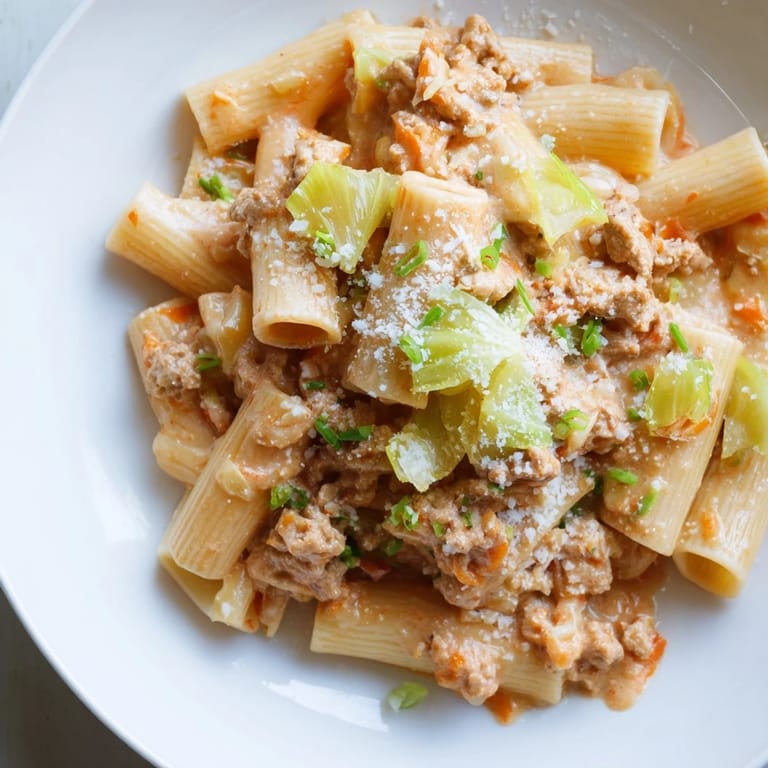
- Add the cooked pasta to the ragu and toss everything together gently but thoroughly, coating each piece with sauce. If the sauce feels too thick, add more pasta water a splash at a time until you have a silky consistency that clings to the pasta without pooling.
- Finish and serve:
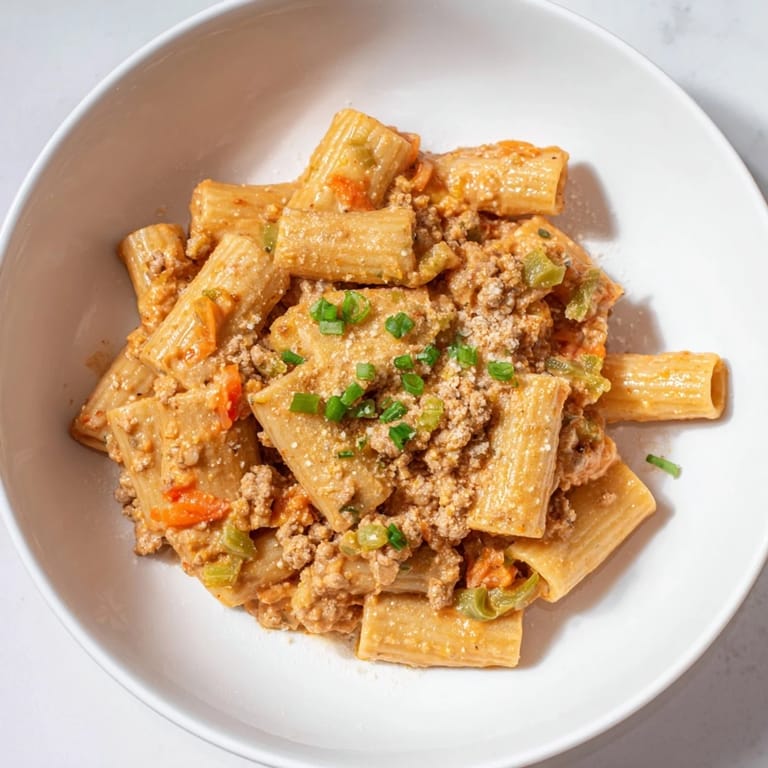
- Divide into bowls and scatter the chopped scallions over the top and grated Parmesan if you want it. Serve while it's still steaming.
 Save
Save The first time someone asked for seconds without being asked if they wanted more was the moment I realized this dish had transcended experiment and become something real. There's magic in how a ragu—something so fundamentally Italian—can welcome a completely different flavor tradition and make room for it at the table.
Why This Fusion Works
Fusion cooking usually fails because people try to force two cuisines together without understanding what makes each one tick. This dish works because both Italian ragu and Korean kimchi are built on the same foundation: deep, savory umami and time spent building flavor. The ragu gives you the slow-cooked richness and the tomato backbone, while the kimchi brings fermented funk, heat, and a brightness that keeps the whole thing from tasting heavy. It's not that they're similar—it's that they're both chasing the same goal, just from different directions.
Customizing for Your Taste
This is one of those recipes that gets better when you make it your own. If you like more heat, don't just add more gochugaru—chop in an extra hundred grams of kimchi and let it really announce itself. For a vegetarian version, use plant-based ground meat and the dish works just as well, maybe even better because the umami from the soy sauce and the kimchi juice does more of the heavy lifting. And if dairy isn't your thing, coconut cream creates a different kind of richness that's almost more interesting than heavy cream, with a subtle sweetness that plays against the spice in unexpected ways.
Serving and Pairing Ideas
Serve this with something to drink that's a little chilled and has some acidity—a Lambrusco if you want to stay Italian, or a fruity Riesling if you want something that can handle the heat and still feel refreshing. On the side, a simple green salad cuts through the richness, or a slice of crusty bread to mop up every last bit of sauce because you'll regret it if you waste even a spoonful. If you want to make it feel more casual, grate some fresh Parmesan over the top and let people finish it themselves, but if you're trying to impress, skip the cheese and let the scallions be the only garnish.
- A chilled, slightly sweet white wine balances the spice and cream better than you'd expect.
- Serve immediately while everything is hot, because this dish gets gluey if it sits and cools.
- Make extra if you can, because leftovers reheat beautifully the next day and the flavors actually deepen.
 Save
Save This dish lives in that beautiful space between home cooking and something special, where the flavors are bold enough to feel exciting but familiar enough to wrap you in comfort. Make it, serve it, watch people's faces when they realize how much flavor you packed into forty minutes.
Recipe FAQ
- → What meats work best in this dish?
Ground pork is traditional, but a blend with beef or just beef also works well, adding rich flavor and texture.
- → How can I adjust the spice level?
Control heat by varying the amount of gochugaru chili flakes and kimchi. Omit gochugaru for milder taste.
- → What pasta types are suitable?
Rigatoni and penne hold the sauce nicely, but other tubular pastas can also be used for even coating.
- → Can this dish be made dairy-free?
Yes, substitute heavy cream with plant-based creams, such as coconut or almond, for a dairy-free version.
- → What garnishes enhance the flavors?
Finely chopped scallions add freshness, while grated Parmesan adds a savory depth; both are optional.