 Save
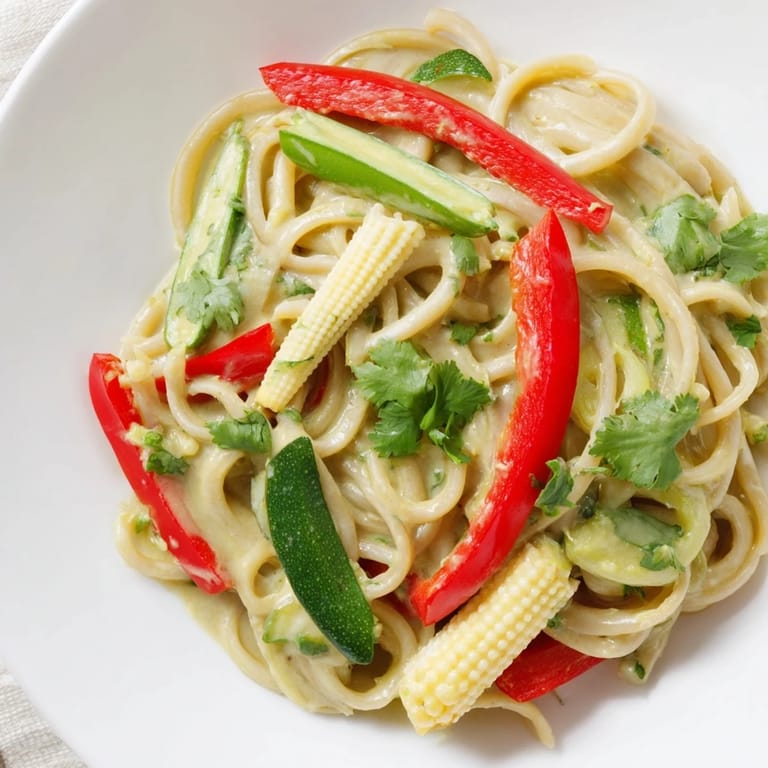
Save I discovered this dish on a Tuesday night when my Thai takeout craving collided with a half-empty pasta box sitting on my shelf. Instead of ordering, I raided my pantry and found a jar of green curry paste I'd forgotten about, and something magical happened—the fragrant, creamy sauce clung to the pasta in a way that felt both familiar and entirely new. That first tangle of linguine coated in coconut curry became my go-to when I wanted restaurant-quality food without leaving the kitchen.
I made this for my sister last summer when she stopped by unannounced, and watching her take that first bite then immediately ask for the recipe felt like a small victory. The kitchen filled with the smell of lime and cilantro, and somehow a weeknight dinner turned into one of those moments where everyone lingers at the table longer than planned.
Ingredients
- Linguine or spaghetti (350 g): Use a good quality pasta that holds sauce well—thinner strands let the curry coat every bite.
- Red bell pepper: The sweetness balances the spice and adds a beautiful pop of color that makes the whole dish feel alive.
- Zucchini: It stays tender without turning mushy if you don't overcook it, and its mild flavor lets the curry shine.
- Snap peas and baby corn: These keep their crunch and add texture that prevents the dish from feeling too soft and saucy.
- Spring onions and cilantro: These fresh elements are essential—they brighten everything at the very end and prevent the dish from feeling heavy.
- Thai green curry paste (3 tbsp): This is your flavor foundation, so taste your brand first; some are much spicier than others.
- Coconut milk (400 ml, full fat): Never skip the full fat version or your sauce will taste thin and watery—the richness is the whole point.
- Vegetable oil: A neutral oil that won't overpower the delicate curry aromatics.
- Soy sauce, brown sugar, and ginger: Together these create depth and prevent the curry from tasting one-dimensional.
- Lime juice: Squeeze it fresh at the end; it wakes up all the flavors and adds brightness that feels essential.
Tired of Takeout? 🥡
Get 10 meals you can make faster than delivery arrives. Seriously.
One email. No spam. Unsubscribe anytime.
Instructions
- Start your pasta:
- Fill a large pot with salted water and bring it to a rolling boil. The water should taste like the sea—this is your only chance to season the pasta itself. Once boiling, add your pasta and cook to al dente, which means just tender enough to bite through without any hard center. Save about half a cup of that starchy pasta water before draining; you'll need it later to help the sauce cling to every strand.
- Build your curry base:
- While the pasta cooks, heat oil in a large skillet over medium heat until it shimmers. Add the green curry paste and ginger, and let them sizzle for a minute or two until the kitchen fills with that unmistakable aromatic fragrance. This blooming step is crucial—it wakes up all the spices and flavors that are locked inside the paste.
- Create the sauce:
- Pour in the full-fat coconut milk, then add soy sauce and brown sugar. Stir gently and let it simmer for a few minutes, stirring occasionally so the paste dissolves evenly and the sauce becomes creamy and smooth.
- Cook the vegetables:
- Add the bell pepper, zucchini, snap peas, and baby corn all at once. You're aiming for that sweet spot where they're tender enough to eat easily but still have a slight crunch that keeps things interesting. Watch them closely—about five to six minutes and they'll be perfect.
- Bring it together:
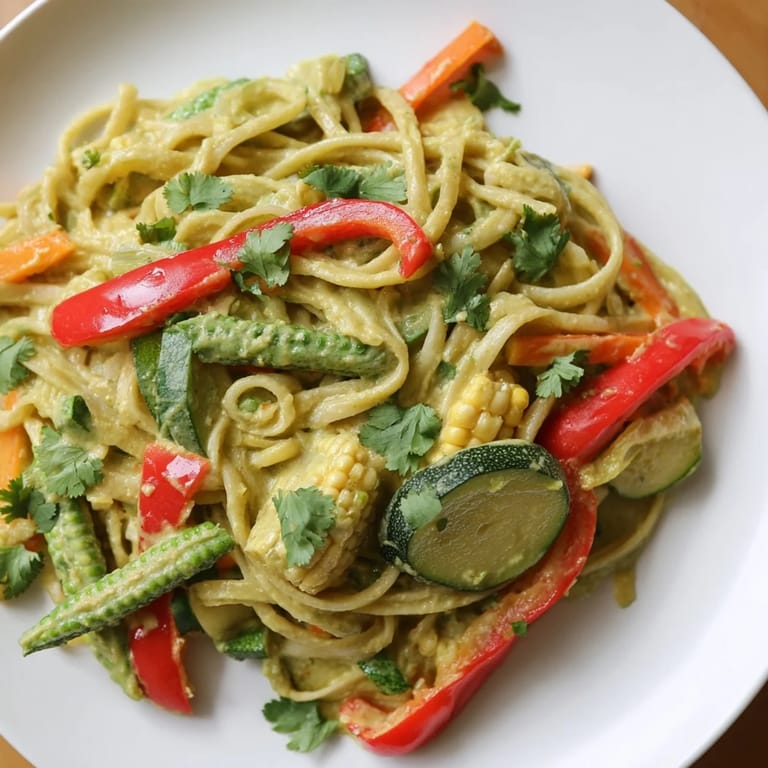
- Add your drained pasta and some of that reserved pasta water to the skillet. Toss everything gently so the curry sauce embraces each strand of pasta. Let it simmer for a couple of minutes so the pasta drinks in all those flavors.
- Finish with brightness:
- Turn off the heat and stir in the spring onions, lime juice, and cilantro. Taste it now and adjust—maybe more salt, maybe more lime if it feels too rich. This final moment is where the dish comes alive.
 Save
Save This dish reminds me that the best meals don't require complicated technique or a list of ingredients you can't pronounce—they just need a few good things combined with intention. It's become my proof that fusion cooking isn't about being fancy; it's about letting flavors from different places have a conversation on your plate.
Making It Your Own
The beauty of this dish is that it welcomes improvisation. If you don't have snap peas, use broccoli florets or sliced carrots. If cilantro isn't your thing, fresh basil or mint work beautifully too. I've made it with shrimp on weekends and with crumbled tofu on busy weeknights, and it feels equally satisfying both ways. The curry paste and coconut milk are the constants; everything else is yours to adjust.
The Spice Question
Green curry paste can range from gently warm to genuinely fiery depending on the brand, so I always taste a tiny bit on my fingertip before committing the full amount. If you're cooking for people who prefer mild flavors, start with two tablespoons and add more once you taste the sauce. A squeeze of extra lime juice and a dollop of coconut cream at the end can also dial back the heat if things get too intense.
Serving and Pairing
Serve this immediately while it's still warm and the pasta has that ideal texture. A crisp white wine like Riesling cuts through the richness beautifully, though ice-cold jasmine tea pairs wonderfully too if you want to stay within the Thai flavor family.
- Garnish with lime wedges, extra cilantro, thin sliced red chili, and roasted cashews if you have them on hand.
- Leftover curry pasta keeps in the fridge for three days and actually tastes better the next day as the flavors deepen.
- Reheat gently with a splash of water or coconut milk to loosen the sauce back up.
 Save
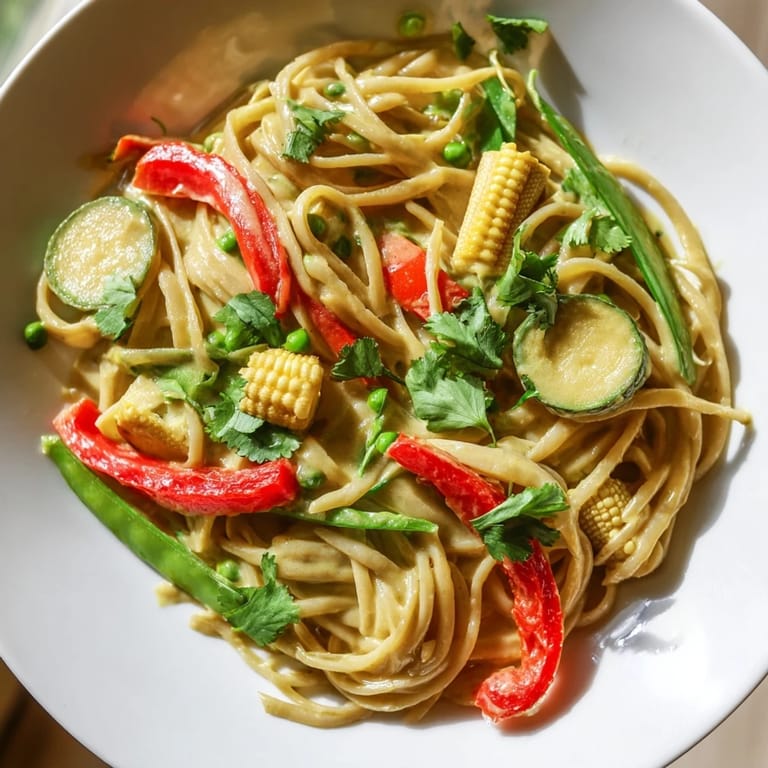
Save This Thai curry pasta has quietly become one of my most-made dishes, not because it's trendy but because it consistently delivers comfort, flavor, and joy in under an hour. Make it once and you'll understand why.
Recipe FAQ
- → What type of pasta works best?
Linguine or spaghetti pairs well, offering a sturdy base for the creamy sauce without overpowering flavors.
- → Can I adjust the spice level?
Yes, modify the amount of green curry paste to suit your desired heat, from mild to spicy.
- → How do I keep the vegetables crisp?
Cook the vegetables just until tender but still firm, about 5-6 minutes, to maintain their texture and color.
- → Is coconut milk necessary?
Coconut milk provides the creamy richness essential to this dish, but light or reduced-fat versions can be used if preferred.
- → What garnishes complement this dish?
Fresh lime wedges, extra cilantro, sliced red chili, or roasted nuts add brightness, heat, and crunch.
- → Can I add protein to this dish?
Yes, cooked chicken, shrimp, or tofu can be incorporated for additional protein and flavor.